








Brazil’s Telenovela Industry and Its Role in Global Film Success
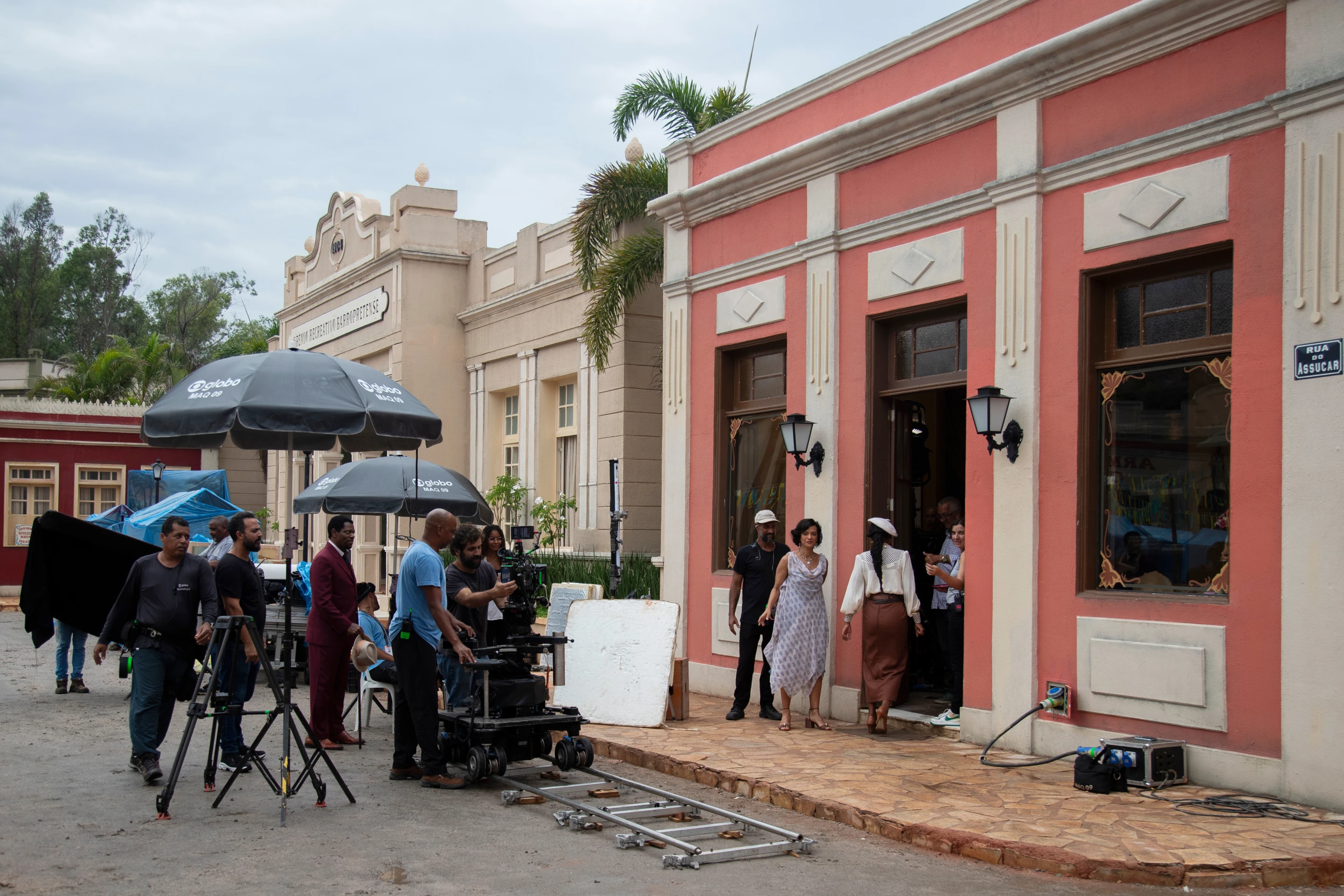
While Hollywood's elite dominate the Oscars, the path to cinematic success in Brazil often begins on the small screen, rather than in the realm of feature films. Since at least the 1960s, telenovelas produced by Brazil's largest broadcaster, TV Globo, have evolved from modest daily dramas into a massive entertainment business. The network boasts a substantial infrastructure, comprising thirteen studios, three set villages, and a considerable 122 editing bays. The program consistently draws a weekly audience, sometimes exceeding 60 million viewers. That number represents a significant portion of Brazil's population, currently estimated at roughly 213 million.
Numerous Brazilian actors, who later graced the screen in Oscar-nominated films, initially gained recognition on television. Actors from productions like "Central Station" (1998), "I'm Still Here" (2024), and the four-category nominee "The Secret Agent" began their careers in television. Before moving on to international films, actors like Wagner Moura and Fernanda Torres became famous in Brazil through telenovelas.
Brazil's relatively few movie theatres, about 3,500, are mostly in big cities, which helps this pattern. Many screens show American blockbusters, so television often gives Brazilian actors their first chance to reach a large audience. This situation creates a cycle where success on television leads to movie roles, and fame in film often brings actors back to television and then back to cinema.
Telenovelas as a Platform for Fame and Production
Telenovelas continue to play a significant part in Brazil's audiovisual sector. Wagner Moura, known for his role in "The Secret Agent," appeared in the telenovela "A Lua Me Disse" (The Moon Told Me) over two decades ago. Fernanda Torres, the star of "I'm Still Here," Brazil's first Oscar-winning international feature, was already a familiar face, thanks to her work in two popular TV Globo comedy series, often considered telenovelas.
Amauri Soares, who leads TV Globo and Globo Studios, described telenovelas as "a continuous platform of creation and production of content." He observed that "The Secret Agent" featured actors and crew members previously associated with Globo, and their return was expected. Moreover, he noted that Globo had backed the film financially, despite its independent production.
TV Globo often runs three telenovelas at once during its prime-time slots. These productions, originating from studios in Rio de Janeiro, air Monday through Saturday. They usually have a run of about six months and involve a workforce exceeding a thousand people. Their climaxes often transform into nationwide spectacles, drawing in large crowds as restaurants, gyms, and pubs tune in.
Talent Development and Cultural Impact
Every year, TV Globo brings on board as many as seventy fresh faces from the worlds of theater, cinema, and local productions. Soares explains that these hopefuls typically dedicate a year to mastering their craft, immersing themselves in the latest technology and production methods before branching out into other ventures. A number of them, however, choose to stay with Globo, contributing to the network's shorter television series.
Dira Paes, an actor, explained how the telenovela and film industries in Brazil are becoming increasingly intertwined. Professionals often move fluidly between television and film, a practice that expands their creative horizons and increases their earning capacity. Paes, for instance, recently starred in the hit series "Pantanal" (Wetlands) and the film "Manas," which earned praise from actors Julia Roberts and Sean Penn.
Paes stressed that telenovelas evoke strong emotional responses in viewers. "Telenovelas are much more than just ratings; they are also about love and affection. When you do it on prime time, you have the power of an entire country watching you," she explained. She is now appearing in "Tres Gracas" (Three Gracas), a show shot in Rio but set in a poorer district of São Paulo.
Television, Cinema and the Future of Brazilian Storytelling
Mauricio Stycer, a television critic and author, contends that Brazil's economic inequalities have, in effect, created a fertile ground for free-to-air television networks, such as Globo, to dominate the entertainment landscape. He suggests that this dominance has, in turn, diminished the public's appetite for cinema. He suggests that this imbalance has, at times, sparked friction within Brazil's film community.
Stycer further notes the tough choice actors often face when offered a role in a telenovela. Should they prioritize the financial stability of a consistent income, or chase the excitement of a career in theater and film? "Most actors have always felt safe on television," he observed. Though other Brazilian networks tried to compete with Globo's dominance, very few managed to make a dent.
The network's popularity has waned since the early 2010s as streaming platforms have grown, although it remains the country's largest employer of actors. Lázaro Ramos, an actor and director, believes that stories that reflect the country's identity resonate powerfully with Brazilian audiences.
"Brazilians see themselves in telenovelas, more and more," according to Ramos. "They are an investment in a national voice through characters, language and esthetics that viewers greatly identify with." He also stated that shifting between theater, cinema, and television is critical for Brazilian performers, noting that while American actors may earn millions from films, telenovelas remain a high-quality and fundamental part of Brazil's cultural business.






Leave a Comment
Your email address will not be published. Required fields are marked *
Latamchronicle
Live, Breaking News Theme