








Historic Pact and Democratic Center Lead Senate Race
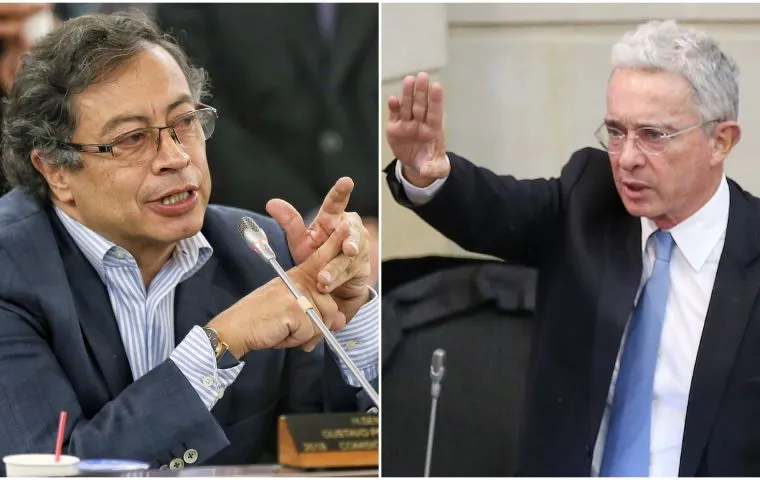
The Historic Pact, a left-wing alliance affiliated to President Gustavo Petro, and the Democratic Center, led by former President Alvaro Uribe, emerged as the two main forces in Colombia's Senate for the 2026-2030 term on Sunday, according to preliminary pre-count findings.
Colombia's electoral body, the Registraduría, published real-time results on its election portal. According to local media, Historic Pact received 3,599,411 votes, while Democratic Center received 2,473,529.
According to that same bulletin, Historic Pact received 22.84% of the Senate vote, ahead of Democratic Center's 15.70%. They were followed by the Liberal Party (1,840,821 votes), Alianza por Colombia (1,566,822), the Conservative Party (1,516,850), and the Party of the United (1,272,697).
Cambio Radical-ALMA, Ahora Colombia, and the National Salvation Movement were also on track for representation, with the latter crossing the 3% mark with 555,632 votes (3.52%).
If validated by official scrutiny, the outcome would maintain the ruling coalition as the largest force in the Senate while restoring Uribe's movement as the primary opposition bloc in the upper chamber.
Before the counting was completed, analysts predicted a fractured Congress divided among about two dozen parties, forcing the next president to form a coalition to pass legislation.
Presidential Primaries and Political Landscape
The legislative voting took place alongside primary-style coalition contests to select presidential candidates ahead of the May election.
With more than 86% of the votes recorded, Senator Paloma Valencia led the right-wing primary, former Senator Roy Barreras led the left-wing race, and former Bogota Mayor Claudia Lopez led the centrist campaign.
Colombians voted for a new Congress as well as coalition primaries, in a vote widely viewed as a vital test ahead of the presidential election in May and a measure of the relative strength of the country's major political parties.
The simultaneous races allowed parties and coalitions to gauge support across the political spectrum while preparing for the next national election.
The primaries pitted the country's three main ideological blocs against one another: the right-wing opposition, the left aligned with President Gustavo Petro's political project, and centrist groups looking for an alternative path.
The outcomes of these primaries were expected to shape campaign strategy and alliances ahead of the presidential election, as party leaders studied voter opinion following the legislative election.
Security Measures and Election Integrity
Election day proceeded peacefully. According to Reuters, more than 246,000 military and national police personnel have been placed on alert due to concerns that illegal armed groups may disrupt voting, while National Registrar Hernan Penagos has defended the process's integrity after Petro highlighted concerns about the vote-counting software.
Authorities deployed the massive security presence as a precaution due to long-standing fears about armed groups' potential intervention in some regions of the country.
Despite these fears, early indications suggest that the voting process went off without a hitch.
The Registraduría updated its election portal with real-time results, including the Senate vote and other elections.
Officials highlighted that protections were in place to ensure transparency and accuracy in the vote-counting process.
The election was keenly watched because it not only determined the composition of the next Congress, but also signaled the political momentum of Colombia's major parties ahead of the presidential election in May.




Leave a Comment
Your email address will not be published. Required fields are marked *
Latamchronicle
Live, Breaking News Theme