








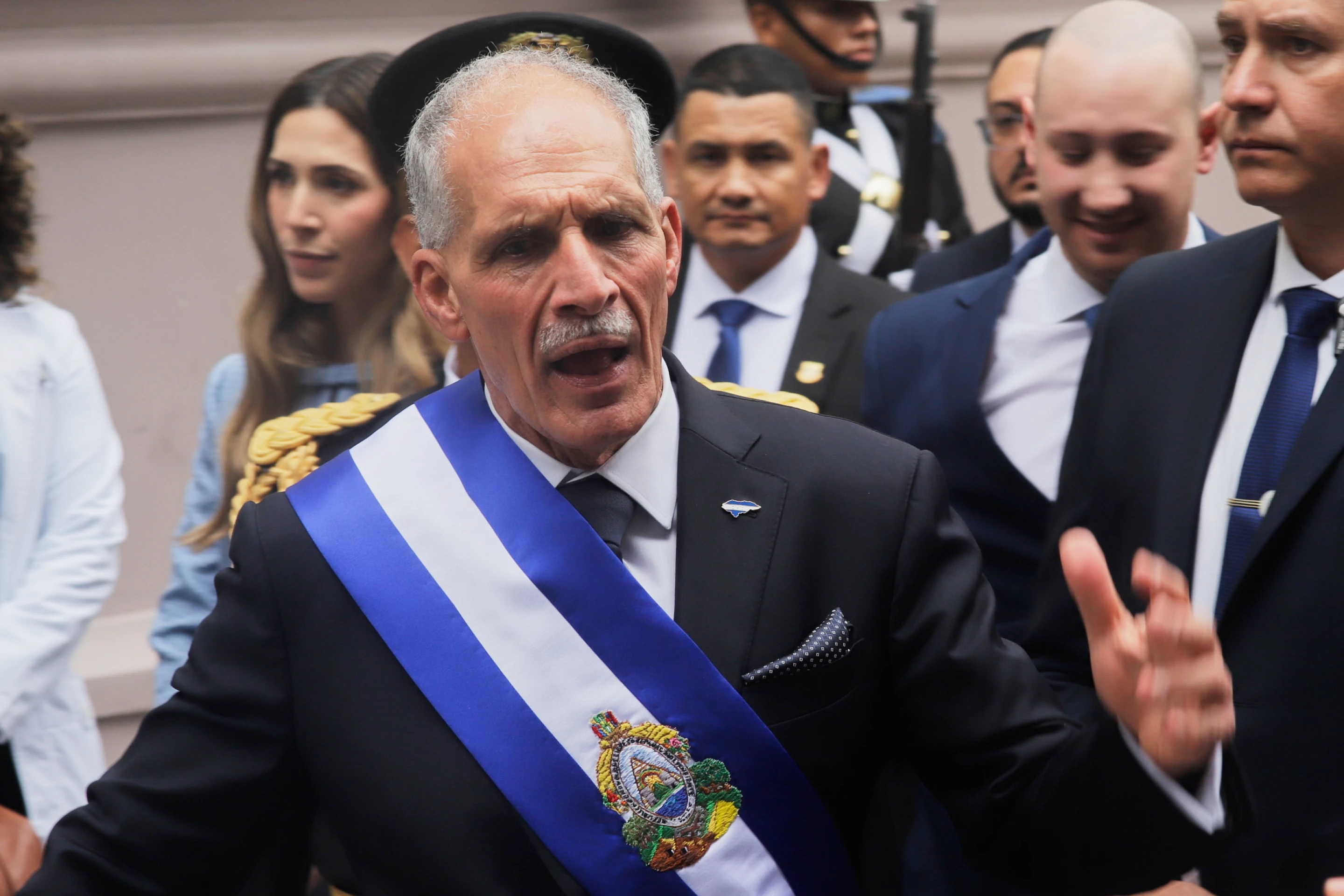
Honduras Reassesses Diplomatic Ties with China
Honduran shrimp farmers are protesting three years after the government cut ties with Taiwan and made diplomatic ties with China in the hopes of getting economic benefits. Their sales to Taiwan fell to $16 million in 2025, down from more than $100 million in 2022. The Chinese didn't fill the gap like they were supposed to. "We were lied to," said Javier Amador, executive director of the National Aquaculture Association of Honduras. He was talking about former President Xiomara Castro's promises that Honduras would have better chances with China after she cut ties with Taiwan and opened an embassy in Beijing in 2023.
Nasry Asfura, who became president with Donald Trump's help and took office in January, has asked for a review of the agreements between Tegucigalpa and Beijing. This has made people hopeful that Honduras will move away from China, which is in line with the Trump administration's goal of reducing China's economic and political power in Latin America. Asfura is expected to go to a security summit on Trump's golf property near Miami on Saturday with other regional officials. Francisco Urdinez, an associate professor at the Pontifical Catholic University of Chile's Political Science Institute, says, "Honduras is probably the most likely country in the world right now to switch diplomatic recognition back to Taiwan." "President Asfura campaigned on it, met Trump at Mar-a-Lago just days after taking office, and his vice president has confirmed the government's plans. However, he said that it is not as simple as flipping a switch, pointing out that Honduras has signed more than a dozen agreements with China since 2023.
Taiwan Recognition as a Measure of Global Influence
Latin America's relations with Taiwan have received attention because they have become a barometer of the power dynamic between the world's two largest economies. Beijing considers Taiwan to be Chinese territory, whereas Washington, despite its lack of formal ties with Taiwan, is the island's strongest supporter and has pledged to assist Taiwan in maintaining its formal friends, which are viewed as crucial for the island to eke out a legitimate presence in the global arena.
Seven of the twelve governments that still recognize Taiwan's statehood are in Latin America, including Guatemala and Paraguay, with the remaining five in the Caribbean. During a visit to Guatemala in February, Secretary of State Marco Rubio thanked the country for continuing to support Taiwan. "It's not easy in a world where there is a lot of pressure to change that recognition and break those ties, but you have always stood firm," Rubio said, promising to collaborate with Guatemala to strengthen its economic ties with Taiwan.
Rep. John Moolenaar, chair of the House Select Committee on the Chinese Communist Party, delivered a similar message in November when he hosted a Guatemalan delegation. "While too many countries bow to the bullying of Beijing, Guatemala stands with the people of Taiwan and prospers through a strong trade relationship," according to Moolenaar. "I support Guatemala's efforts to oppose Chinese aggression in our hemisphere and look forward to working with Guatemala on areas of common ground." U.S. lawmakers have sponsored legislation that may offer $120 million in support to Taiwan's allies over the next three years.
Shrimp Industry Collapse and Economic Fallout
Asfura, who ran on the promise of breaking ties with Beijing, says that there is more to untangle than just diplomatic symbols. China has put hundreds of millions of dollars into Honduras, so any change in foreign policy could be hard to make. The government has to deal with the economic effects of breaking ties with Beijing while also dealing with pressure from industries at home that were hurt by the change in diplomacy.
Enrique Millán-Mejía, a senior fellow on economic development at the Atlantic Council's Adrienne Arsht Latin America Center, says that Honduras could give Taiwan "special status" and pull out of Beijing's Belt and Road Initiative, which has helped China open markets and grow its power.
Panama was the first Latin American country to pull out of the Belt and Road Initiative last year. Beijing was furious and accused the US of using "pressure and coercion" to stop cooperation. Urdinez said that Asfura might go even further and re-establish formal ties with Taiwan. Urdinez told reporters, "Asfura's calculus is really about the U.S., not Taiwan itself." "To get on Trump's good side, you basically have to recognize Taiwan.
When asked about a possible change of allegiance, China and Taiwan both responded diplomatically. Liu Pengyu, a spokesperson for the Chinese Embassy in Washington, says that Honduras now has better chances for long-term growth since establishing diplomatic ties with China. She also says that both countries have "reaped fruitful cooperation outcomes in various fields." "The Taipei Economic and Cultural Representative Office, which is like Taiwan's embassy in Washington, said that Taiwan will keep working to improve its relationship with Honduras in an open and practical way, without any conditions, and based on equality and reciprocity.
Honduras Faces Strategic and Economic Choices
Asfura, who ran on the idea of breaking ties with Beijing, thinks there is more to untangle than just diplomatic symbols. China has put hundreds of millions of dollars into Honduras, so any change in foreign policy could be difficult. The government needs to weigh the economic effects of cutting ties with Beijing against the pressure from industries at home that were hurt by the change in diplomacy.
Enrique Millán-Mejía, a senior fellow on economic development at the Atlantic Council's Adrienne Arsht Latin America Center, says that Honduras could give Taiwan "special status" and pull out of Beijing's Belt and Road Initiative, which has helped China open markets and grow its power.
Panama was the first Latin American country to pull out of the Belt and Road Initiative last year. This made Beijing very angry, and they said the US was using "pressure and coercion" to stop cooperation. Urdinez said that Asfura might go even further and re-establish official ties with Taiwan. Urdinez told reporters, "Asfura's calculus is really about the U.S., not Taiwan itself." "To get in Trump's good graces, you need to recognize Taiwan.
When asked about a possible change of allegiance, China and Taiwan both answered diplomatically. Liu Pengyu, a spokesperson for the Chinese Embassy in Washington, says that Honduras now has better chances for long-term growth since it started diplomatic relations with China. She also says that the two countries have "reaped fruitful cooperation outcomes in various fields." "The Taipei Economic and Cultural Representative Office, which acts as the island's unofficial embassy in Washington, said that Taiwan will keep working to improve ties with Honduras in a straightforward and practical way, without any conditions, and on the basis of equality and reciprocity.
Why This News Is Important
This situation exemplifies the growing geopolitical competition between the United States and China in Latin America. Honduras' possible shift in diplomatic recognition could have an impact on regional alliances and the global balance of support for Taiwan. The issue also demonstrates how foreign policy decisions can have a direct impact on local industries, as Honduran shrimp farmers have suffered significant losses since trade with Taiwan collapsed.
What to Watch Next
- Whether President Nasry Asfura decides to restore formal diplomatic ties with Taiwan
- The outcome of Honduras’ review of agreements and investments with China
- If Honduras considers leaving China’s Belt and Road Initiative
- How the United States responds and whether it increases support for Honduras
- Possible reactions from China if Honduras changes its diplomatic stance



Leave a Comment
Your email address will not be published. Required fields are marked *
Latamchronicle
Live, Breaking News Theme