







Hegseth Calls for Aggressive Action Against Drug Cartels
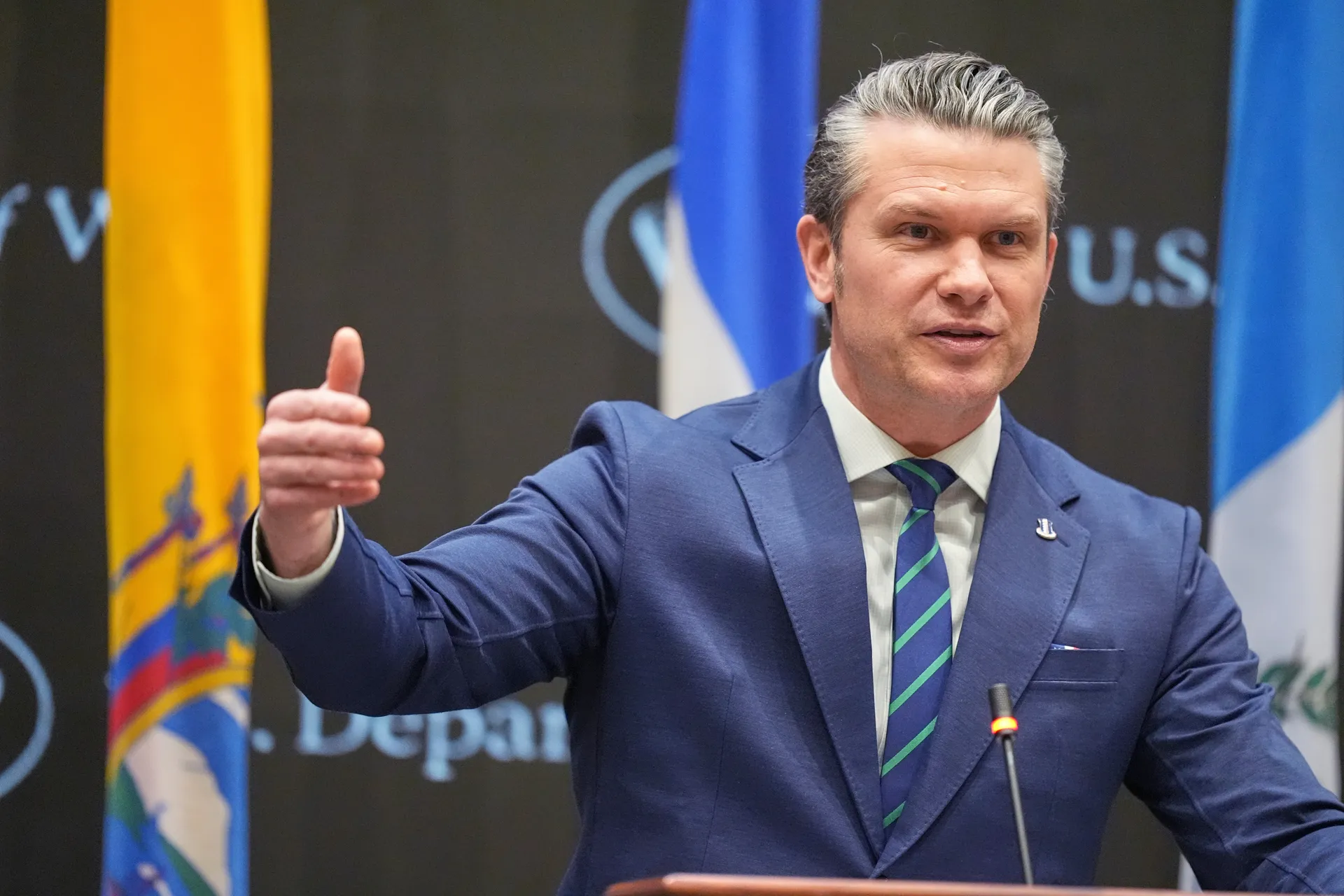
Defense Secretary Pete Hegseth urged Latin American countries on Thursday to be more aggressive in combating drug cartels, warning that if governments fail to effectively combat criminal organizations that directly threaten the United States and border security, the Trump administration will be forced to act on its own. "America is prepared to take on these threats and go on the offense alone if necessary," Hegseth made the remarks during a lecture to defense officials from partner states in the region at the United States Southern Command in Miami.
Hegseth spoke at what the Pentagon called the inaugural "Americas Counter Cartel Conference," which included leaders from Argentina, Honduras, and the Dominican Republic, as well as more than a dozen conservative nations loyal to President Donald Trump. The majority of the military commanders traveled to Florida with their presidents, who are due to meet with Trump on Saturday at his nearby golf club.
The defense secretary stated that the United States and Latin America share a Christian history, which is at risk due to decades of passivity and a mainly law enforcement approach to combating organized crime and terrorist networks in the Western Hemisphere. "Business as usual will not stand," he warned, promising US assistance to combat cartels, restore deterrence, and "make the Americas great again."
White House Officials Back Tough Military Approach
His remarks were repeated by Stephen Miller, the deputy White House chief of staff and a key architect of Trump's strong attitude in the region. "Cartels that operate in this hemisphere are the ISIS (Islamic State group) and al-Qaida of this hemisphere and must be treated just as ruthlessly," Miller said, adding that "hard power" and fatal force, rather than criminal justice, must be utilized to repel the groups.
"The human rights that we are going to protect are not those of the savages that rape, torture and murder but those of the average citizens," he told reporters. The conversations take place as the Republican government aspires to use military capabilities to reclaim hemispheric supremacy while also launching a war in Iran.
The summit also underscores Washington's efforts to mobilize Latin American allies. Defense officials and military commanders from various countries attended the meeting, as the United States advocated for increased collaboration in combating transnational criminal groups. The administration's stance stresses swift action and increased security cooperation to counter dangers presented by large drug trafficking networks operating throughout the area.
Trump Administration’s Strategy in Latin America
When Trump entered office in January 2025, he promised a renewed emphasis on Latin America, a strategic shift described by his national security plan as the "Trump Corollary" to the 19th-century Monroe Doctrine, which tried to prohibit European intrusions into the Americas. A stronger dependence on the US military to destroy drug cartels, which have long been blamed for rising crime and murder rates that stifle Latin America's economic potential and spur migration to the United States, is critical to achieving this goal.
"For too long, leaders in Washington abandoned the simple wisdom of the Monroe Doctrine," Hegseth stated, alluding to Trump's emphasis on regional security as the "Donroe Doctrine." Trump initially labeled Mexican and Venezuelan gangs as international terrorist groups. Later, he stated that Washington was engaged in "armed conflict" with those groups.
The unusual claim of presidential power to combat drug trafficking is central to the White House's legal justification for dozens of strikes on suspected drug smugglers in the Caribbean Sea and Eastern Pacific Ocean - 44 boat strikes in total, with at least 150 people killed.
Regional Reactions and Concerns Over Militarization
A major naval deployment, unprecedented in Latin America since the end of the Cold War, also set the ground for the US military action in early January that apprehended Venezuela's then-president, Nicolas Maduro. He is currently facing narcotics accusations in New York.
Trump's policy has gained backing from conservatives in the region, such El Salvador's Nayib Bukele, who campaigned on promises to wield the "mano dura" — iron fist — against criminal groups. Ecuador only recently conducted coordinated operations with US armed forces against organized crime gangs.
However, depending on the military to take up the role normally played by civilian law enforcement has difficulties in an area where military institutions and accountability are weaker, armed forces have a history of human rights violations, and corruption is a persistent problem. "Without strong rule-of-law institutions and civilian oversight, militarizing the fight against cartels can weaken the very institutions needed to defeat them," said Rebecca Bill Chavez, president of the Inter-American Dialogue and former deputy assistant secretary of defense for Western Hemisphere affairs.


Leave a Comment
Your email address will not be published. Required fields are marked *
Latamchronicle
Live, Breaking News Theme