








Brazil Repositions Itself as a Global Industrial Power
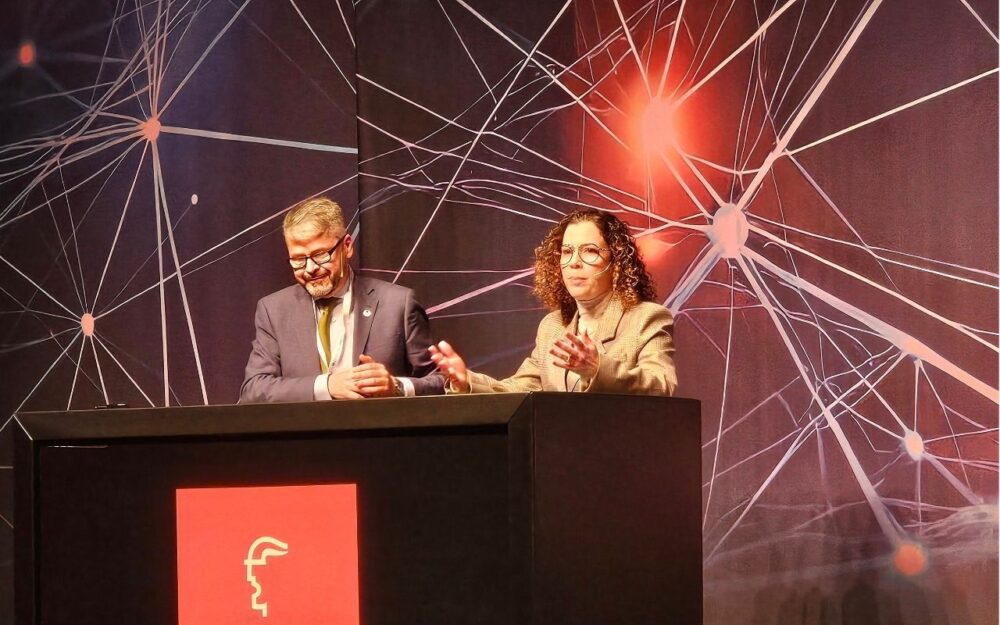
Hanover, Germany: Brazil's message during the Hannover Messe Press Preview last week was clear. The country is much more than the agricultural powerhouse that the world is used to seeing. Brazil, the fair's 2026 Partner Country, is reintroducing itself through the world's premier industrial trade expo. Two months before the Hannover Messe opens its doors, the Brazilian Trade and Investment Promotion Agency (APEX Brazil) team showcased the country's competitive advantages outside of agriculture.
When most people think of Brazil, they envision Carnival, coffee, soybeans, and rainforests. However, Brazil will arrive at Hannover Messe 2026, the world's premier industrial trade exhibition, with a totally different message. As this year's official Partner Country, South America's largest economy is taking advantage of one of its most important opportunities to reintroduce itself to the world. Brazil will demonstrate its strengths not just as an agricultural powerhouse, but also as a major leader in innovative manufacturing, green energy, digital technology, and sustainable industry.
Building a Complete Industrial Ecosystem
According to Alex Figueiredo, Head of Office of APEX Brazil Europe, Brazil's involvement intends to challenge long-held views.
"I understand that many people connect Brazil largely with agribusiness. Although we are a leader in that industry, we are much more than that.
Two years of preparation with Deutsche Messe have resulted in a delegation that tells a unique story. The story of a country that develops and manufactures aircraft, automobiles, trucks, and machines. This develops world-class software. This promotes biofuels while feeding the globe. That possesses the raw ingredients Europe requires for its green transformation and the industrial capacity to process them.
"Our idea is to show Brazil as a whole ecosystem," explains Marcia Nejaim, director of APEX Brazil Southeast Region, in an interview with DirectIndustry. "Not only agribusiness, not only cultural things — but as a group of solutions to tackle the problems of today."
Brazil is presenting one of its most ambitious delegations to date, with 140 exhibitors, 59 startups, and around 300 firms spread across nearly 2,700 square meters in six rooms. President Lula is present, emphasizing the country's support to the event.
A Green Industrial Base Powered by Renewable Energy
One of Brazil's most significant advantages at Hannover Messe is its access to clean energy. Renewable energy sources such as hydropower, wind, solar, and biomass account for around 85% of Brazil's electricity generation. This results in one of the cleanest electrical mixes among major global economies.
"Solutions and machines made in Brazil have a low carbon footprint," explains Alex Figueiredo. "This is something we have because our energy is green."
This benefit applies throughout the entire industrial supply chain. Brazil is the world's second-largest source of key minerals and rare earth commodities, which are utilized in batteries, electric motors, semiconductors, and other technologies needed for the global energy revolution.
"We have the entire supply chain in Brazil," explains Figueiredo. "We can deliver without supply chain disruption — and it's green."
Brazil also has decades of expertise with biofuels. The country pioneered flex-fuel technology, with Volkswagen building the world's first flex-fuel vehicle there. Brazil is currently ramping up sustainable aviation fuel and next-generation biofuels.
Crucially, as Figueiredo points out, "this has been achieved without competing with the food industry," implying that the technique starts from a low-carbon base.
Industrial Strength and Innovation Beyond Agriculture
The delegation at Hannover Messe was meticulously planned to break agribusiness stereotypes by mixing huge national champions with SMEs and startups.
Among the key companies participating is Embraer, one of the world's leading aircraft manufacturers, which will showcase urban air mobility solutions through its EV Air Mobility subsidiary, which aims to redefine transportation in smart cities.
WEG, one of the world's major electrical machine manufacturers with operations in 140 countries, will also participate. Vale, a worldwide mining powerhouse, will offer crucial materials technology, while BE8 will showcase biodiesel solutions aimed at decarbonizing logistics.
Brazil also has the most active startup ecosystem in Latin America, accounting for half of the region's venture capital activity. The delegation consists of 59 startups, including one that was the first in the region to be accelerated by Nvidia.
Brazil has announced a national economic growth agenda with six pillars: sustainable industrial chains, health, infrastructure, digital transformation, decarbonization, and military. A new National Energy Transition Policy is driving the transition to a low-carbon economy, while a regulatory framework for green hydrogen seeks to position Brazil as a leading producer and exporter of low-carbon hydrogen.
"Brazil is a stable democracy, a strong emerging economy, and a key producer of renewable energy and strategic minerals," Ambassador H.E. Rodrigo Baena Soares stated during a news conference.
Trade and Strategic Partnerships with Europe
Timing is also important in Brazil's strategy. The recently signed EU-Mercosur trade agreement, one of the largest in history, significantly strengthens Brazil's position. The agreement gives European businesses access to a market of more than 270 million consumers through lower tariffs and quicker customs procedures. This presents opportunities for Brazilian producers to expand their exports, collaborate, and attract investment.
The temporary application of the Mercosur agreement could be a significant step forward in our journey to diversification and resilience," Ambassador Baena Soares said, especially in light of increased global protectionism and economic volatility.
Brazil has also had a long relationship with Hannover Messe, as it was the first Partner Country when Deutsche Messe introduced the concept in the 1980s. Brazil intends to return in 2026 and is seeking long-term collaboration in new technologies and industrial innovation.
"In terms of green hydrogen, we want to form long-term collaborations," Figueiredo explains. "In AI and quantum technology, we know Germany is strong, and we have companies that can work together."
Brazil aims to be a global leader in AI efficiency by investing in high-capacity computer infrastructure, improved Portuguese language models, and corporate innovation.
"We are bringing companies that aren't just looking for customers," Marcia explains. "We are also bringing companies that want to sell investment opportunities — in data centers, hydrogen, and strategic sectors related to decarbonization and energy transition."
Figueiredo's message is clear: "Brazil is prepared. Ready to collaborate, invest, and innovate together."
Hannover Messe 2026 will take place in Hanover, Germany, from April 20th to April 24th, 2026, with Brazil as the Official Partner Country.



Leave a Comment
Your email address will not be published. Required fields are marked *
Latamchronicle
Live, Breaking News Theme