







Islandwide Blackout and Immediate Impact
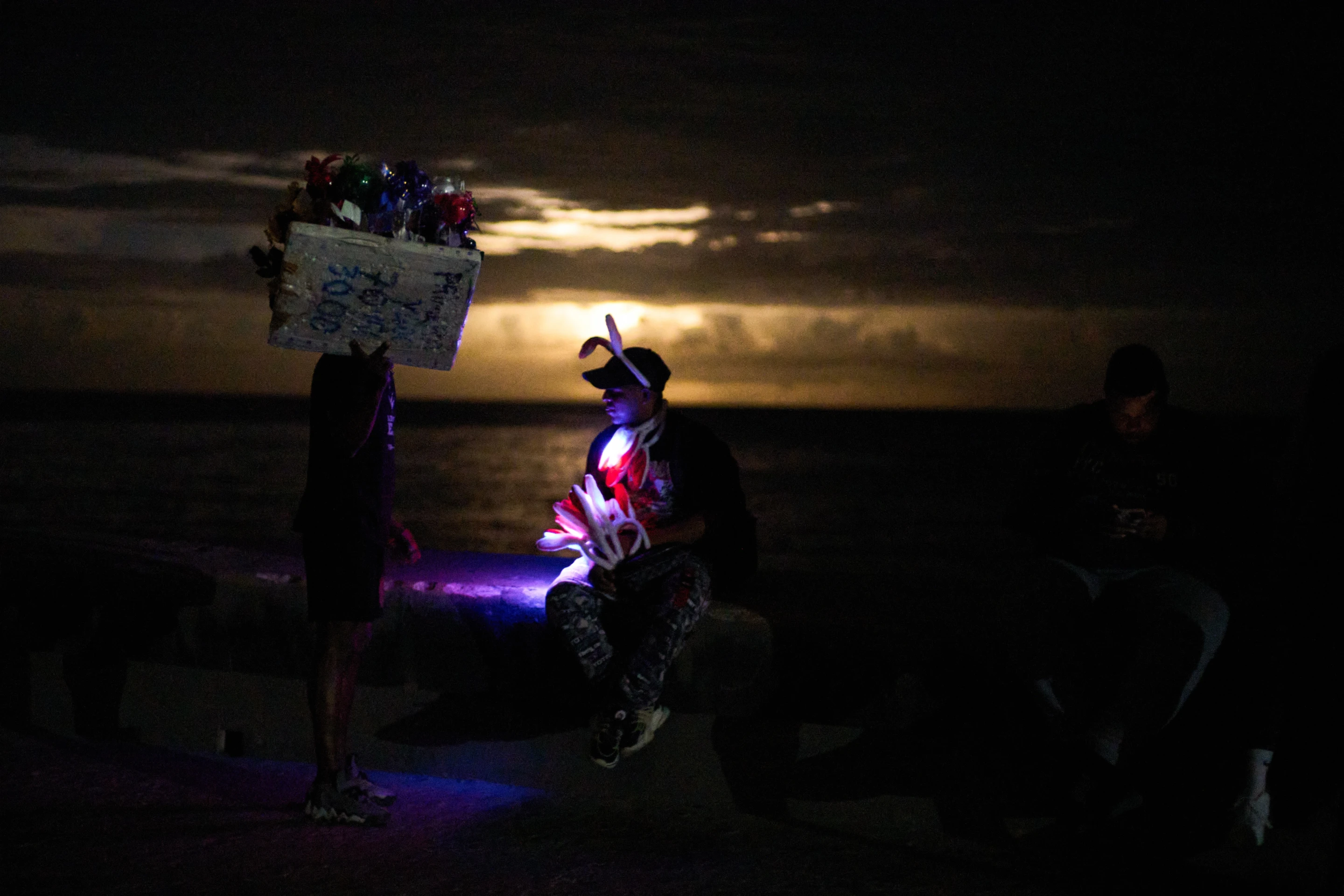
HAVANA (AP) — Cuban officials reported an islandwide blackout Monday as the country's energy and economic difficulties worsened and its power grid continued to deteriorate. On X, the Ministry of Energy and Mines announced a "complete disconnection" of the national electrical system, adding that an investigation was underway. They also noted that no individual units had failed when the grid went down. Lázaro Guerra, the ministry's electrical director, spoke to state media late Monday, explaining that teams were working to bring several thermoelectric units back online, a key step in getting the power back. "It has to be done slowly to prevent further problems," he explained. "Because systems, when they're really weak, are more likely to break." As night fell, a few homes glowed with the light of candles. In a dark Havana dwelling, the sounds of children, their voices mingling with their mother's, filled the air. "We have no choice but to prepare a mattress for the girls to sleep here," said Yuneici Cecilia Riviaux, motioning to an open door. "I don't have a rechargeable fan or a generator." This is the third major blackout to strike Cuba in just four months.
Public Struggles and Partial Power Restoration
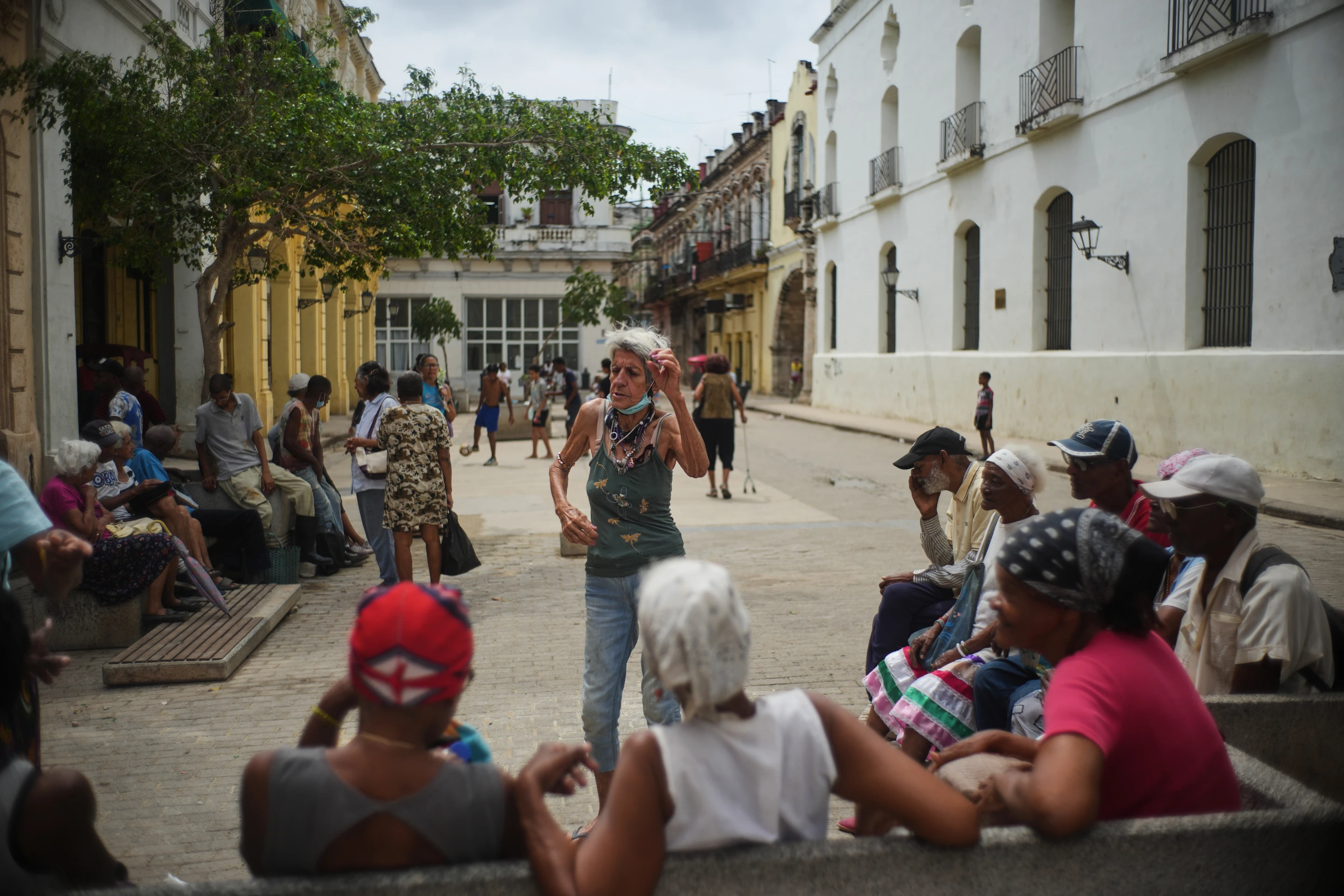
Tomás David Velázquez Felipe, a 61-year-old Havana resident, says the constant outages make him think Cubans who can should just pack up and leave the island. "What little we have to eat spoils," he noted. "Our people are too old to keep suffering." By Monday night, state-owned media reported that crews had restored electricity to 5% of Havana inhabitants, or approximately 42,000 people, as well as many hospitals throughout the island. Officials said they will prioritize the communications sector next, while cautioning that the minor circuits that have been restored so far may fail again. Cuba's aging infrastructure has crumbled considerably in recent times, leading to a surge in outages and widespread blackouts. Yaimisel Sánchez Peña, 48, voiced her frustration over the food she bought with remittances from her son in the United States going bad. She also worried about her 72-year-old mother, who endures the daily hardships of power cuts. Mercedes Velázquez, a 71-year-old Cuban, bemoaned yet another plunge into darkness. "We're just waiting to see what happens," she said, explaining that she'd recently given away some of the soup she'd made while it was still good, to prevent it from going to waste. "Everything goes bad."
Political Tensions and U.S.-Cuba Relations
This followed a January warning from US President Donald Trump, who threatened penalties against any nation purchasing or supplying oil to Cuba. The Trump administration has made it clear that any loosening of sanctions on Cuba hinges on the island's release of political prisoners, alongside a commitment to political and economic reform. Trump has even floated the idea of a "friendly takeover of Cuba." On Monday, he voiced his conviction that he would have the "honor of taking Cuba." "I mean, whether I release it or take it." "I think I could do anything with it," Trump said, referring to Cuba, which he described as a "very weakened nation." A U.S. official, along with a source privy to the talks between Washington and Havana, both speaking off the record, indicated the Trump administration is targeting Cuban President Miguel Díaz-Canel's exit as part of its discussions about the island's future. They didn't specify who they were considering as a successor. This comes after Díaz-Canel's first public admission of conversations with the U.S. The New York Times reported on Monday that the administration is actively trying to remove Díaz-Canel from power.
Energy Crisis and Infrastructure Collapse
William LeoGrande, a professor at American University and a long-time observer of Cuba, points to a lack of proper maintenance as a key issue with the island's energy grid. He describes the infrastructure as "way past its normal useful life." Speaking to reporters, LeoGrande remarked on the skill of the technicians, calling them "magicians" for keeping the grid operational, given its current condition. He also suggested that if Cuba significantly reduces its energy consumption and boosts its use of renewable sources, it could weather a period without oil shipments. "But it would be constant misery for the general population, and eventually, the economy could collapse just completely and then you would have social chaos and probably mass migration," he told me. To increase solar electricity even quicker than Cuba accomplished last year, LeoGrande believes other countries, particularly China, must be willing to quadruple or more their provision of such technology. On Friday, Díaz-Canel announced that the island hadn't seen any oil imports for three months. Instead, they're leaning on solar power, natural gas, and thermoelectric plants. This situation has forced the government to delay processes for tens of thousands of people.
Economic Constraints and Recovery Measures
A big outage in the island's west occurred almost a week ago, leaving millions without power. In early December, western Cuba saw yet another big blackout. Venezuela's critical oil imports were interrupted after the US attacked the South American country in early January and detained its then-president, Nicolás Maduro. Cuba, despite producing a significant portion of its petroleum and generating its own electricity, struggles to keep up with demand. The electric grid's ongoing decline is a major factor. Compounding the problem, the Cuban government lacks the foreign currency needed to purchase spare parts or invest in upgrades for the power plants and their supporting infrastructure. "It's a perfect storm of collapse," LeoGrande noted. He also highlighted that the thermoelectric plants rely on heavy oil, a fuel high in sulfur, which accelerates machinery deterioration.
Óscar Pérez-Oliva Fraga, the Deputy Prime Minister of the Ministry of Foreign Trade and Foreign Investment, has stated that Cuba is open to trading with American businesses, even with the restrictions imposed by the embargo. He also stated that he is taking new steps to enhance the island's economy. According to state media, one option is to allow Cubans living abroad to become partners or owners of private firms in the country and participate in large-scale projects, including infrastructure projects. He stated that those Cubans will be able to work with Cuban private firms and create relationships with both state-owned and private Cuban entities. According to Pérez-Oliva, the government will also grant land under usufruct for the construction of specific projects. He added Cubans living abroad will be permitted to open foreign currency bank accounts in Cuban banks, making transactions easier.

Leave a Comment
Your email address will not be published. Required fields are marked *
Latamchronicle
Live, Breaking News Theme