








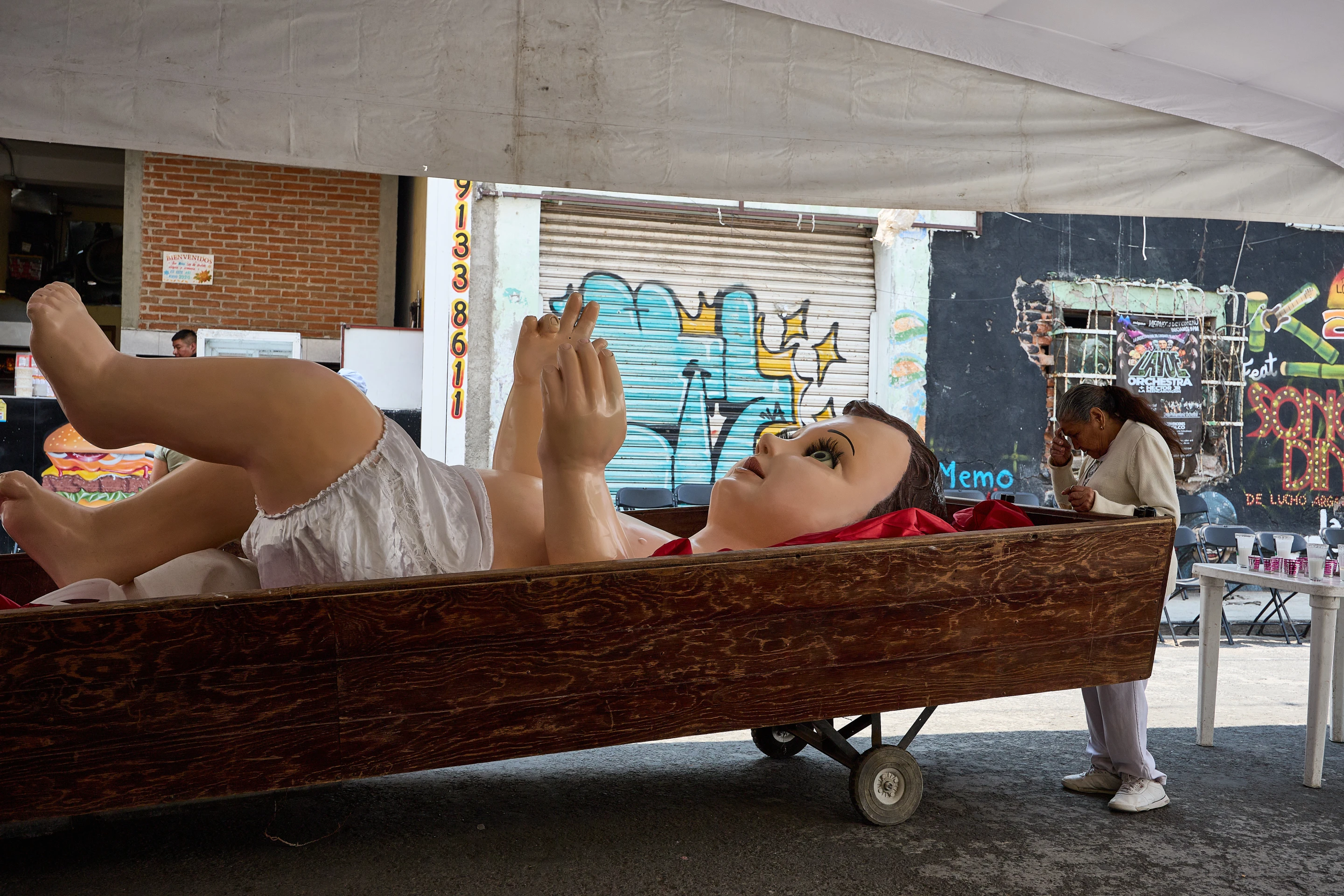
A 16-foot statue of Baby Jesus appeared this week in Mexico City's Tepito neighborhood, which is well-known for its bustling street markets and strong local identity but also for long-standing crime issues. The figure has a newborn-like face and body, but its massive size makes it a remarkable presence as it travels across central Mexico spreading a message of peace. When the statue arrived in Tepito, neighbors gathered to pray, make offerings, and celebrate Mass. Guillermo Ramírez, a 49-year-old musician who calls this place home, handled all the arrangements for the visit. The Baby Jesus holds profound significance for him and his family, given their deep Catholic faith. By bringing the monument to Tepito, he sought to demonstrate that there are nice individuals in the community. Ramírez first encountered the colossal Baby Jesus in 2024, during a visit to a nearby community. The devotion it elicited among worshippers convinced him that his own community might benefit from the same spiritual presence. He contacted the statue's owners and scheduled its first visit to Tepito later that year. Alma Cravioto, his wife, explained that they hoped the statue, a symbol of peace, would foster a sense of harmony within their family and the surrounding community.
The Artistic Project Behind the Statue
Abraham Gómez, a Mexican artist, and his brother built the massive statue back in 2013. Gómez explained that the sculpture originated from a project he called "Walk for Peace and Good." The goal was to spread positive values within families, towns, and communities through religious art. Since its inception, the monument has traveled to various Mexican states, including Puebla, Tlaxcala, and Jalisco. Some of the communities it has visited have experienced violence tied to drug trafficking in their everyday lives. Gómez acknowledged that security issues have, at times, made their journeys more difficult. However, these challenges only highlight the project's continued importance.
The sculpture, a monumental and complex creation, commands attention. It is constructed with a steel frame and covered in layers of polyurethane foam and resin reinforced with fiberglass, giving the statue a total weight of almost half a ton. Gómez says he was inspired by the miniature Baby Jesus figurines popular among Mexican Catholics. These figures are customarily adorned and prepared in front of Candlemas on February 2, a widely observed religious holiday. Gómez felt that by creating a huge version of the figure, he might turn that devotion into a traveling symbol capable of carrying a spiritual message to communities across the country.
Processions, Rituals and Community Gatherings
Transporting the massive statue is a huge undertaking that necessitates meticulous planning. To move the image, Gómez and his brother install it inside a large basket mounted on top of a flatbed truck. Each voyage often begins with a procession to a local church or gathering place where citizens can participate in religious activities. Visitors are welcome to bring offerings, and a priest often celebrates Mass during their stay. When the monument arrived in Tepito on Monday night, scores of residents gathered around the towering image as music and prayers filled the air. The meeting also included the sharing of "atole," a traditional warm corn-based drink that is often provided at communal and religious events. The organizers highlight that the statue's trips do more than just attract attention and provide opportunities for photographs. Gómez emphasized that they want attendees to leave with a lasting memory. The statue's significance shifts dramatically during these occasions. It evolves from a simple religious figure into a potent emblem of unity. Neighbors come together, sharing customs and reflecting on the project's fundamental theme: peace.
Faith, Tradition and Personal Devotion in Tepito
On Tuesday, the monument in Tepito was moved from its slumbering state to stand tall. In keeping with a traditional Mexican custom, local residents dressed Baby Jesus figures in textiles inspired by Huichol art, a vibrant Indigenous artistic tradition from western Mexico. Gómez explained that this action reflects a wish to revive and honor ancestral community practices, acknowledging the dual influence of Spanish and Indigenous cultures on Mexico's identity. The statue's presence resonated deeply with many locals. María Concepción Franco, a Tepito resident, shared her enthusiasm for the colossal sculpture's arrival in her neighborhood. She portrayed the visit as a blessing, claiming that Baby Jesus had previously performed miracles for her. Over the years, Mary has received countless pictures of the Baby Jesus from friends and family. She keeps a few at home and always has one tucked away in her purse, a small symbol of her devotion. Franco mentioned that her faith gives her the strength to endure challenges. Even though she doesn't have children, Mary explained that she feels a deep bond with the image and remains steadfast in her commitment to it.




Leave a Comment
Your email address will not be published. Required fields are marked *
Latamchronicle
Live, Breaking News Theme