








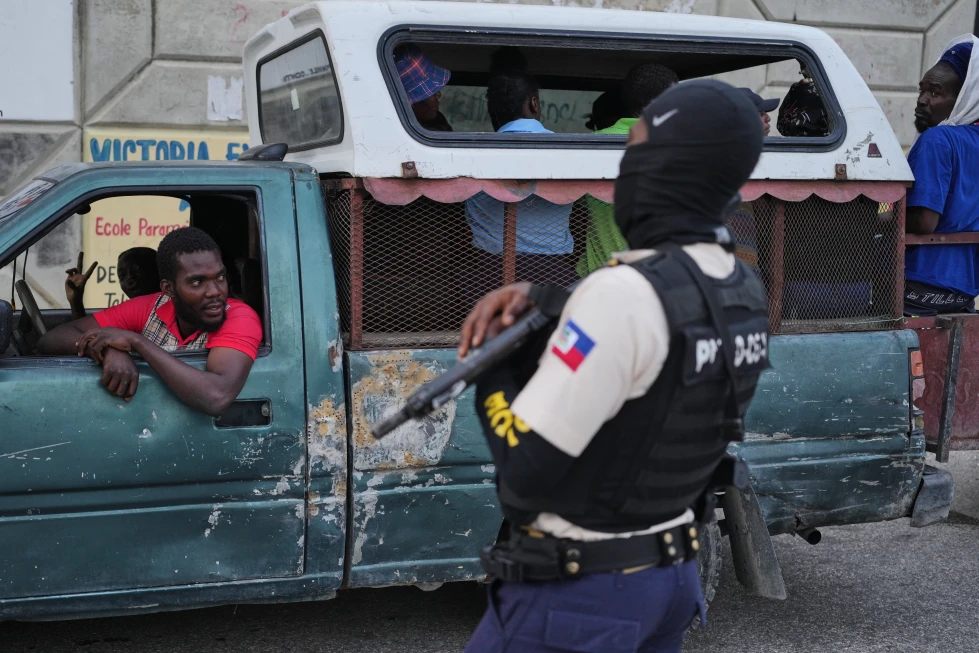
Human Rights Watch Reports Deaths from Drone Attacks in Haiti
Human Rights Watch said that drones used by Haitian security forces and private contractors killed at least 1,243 people and injured 738 others. According to the group, the deaths happened between March 1, 2025 and January 21, 2026. Among those killed were 17 youngsters and 43 adults who were not thought to be members of any criminal organization. At least 49 of them injured were presumed to be civilians. The most lethal drone operation documented in the report killed 57 people. Human Rights Watch's Americas director, Juanita Goebertus, said Haitian authorities must swiftly rein in their security forces and private contractors before more children are killed. A representative for the Haitian National Police did not reply to a request for comment on the findings. According to the nonprofit organization, the number of armed drone attacks in Haiti's capital, Port-au-Prince, which is almost 90% controlled by gangs, has increased considerably in recent months. The group observed 57 drone assaults between November and late January, nearly doubling the previous year's 29 incidents between August and October.
Evidence and Incidents Highlighted in the Report
Human Rights Watch reported that its investigators scrutinized seven videos featuring armed quadcopter drones. These videos had either surfaced on social media or been provided directly to the organization. The researchers were able to identify the locations depicted in four of the films, all situated within Port-au-Prince. According to the report, the footage depicts the continuous deployment of explosive-equipped drones to strike vehicles and humans. Some of those targeted were armed, but the organization stated that none appeared to be doing violent activities or constituting an urgent threat to life at the time of the attacks. Human Rights Watch also stated that it did not identify widespread usage of drones among criminal groups in Haiti. One of the occurrences recounted in the study occurred on September 20, 2025, in the Simon Pele area, an exceedingly impoverished hamlet run by the same-named gang. A drone strike killed nine people, including three children, and injured at least eight more as the gang boss prepared to present gifts to local children.
Civilian Impact and Witness Accounts
Human Rights Watch has collected witness reports that describe serious consequences for people caught up in the attacks. According to one resident, an explosion from a drone attack severed a baby's feet. Among the dead was a six-year-old child. Her mother was cited as adding that even in gang-controlled regions, there are innocent individuals raising their children and trying to lead regular lives. According to the article, victims' relatives also encountered issues with burial arrangements. Residents claimed that the criminal group in charge of the region coordinated and controlled entry to the funerals of those murdered in the attack. Some people said that only those who took money or support from the criminal organization were permitted to attend the funerals. In another allegation from January 1 of this year, a woman claimed she saw a drone descend and explode upon a truck conveying her cousin, killing her.
International Concerns and Security Operations in Haiti
Human Rights Watch stated that several of the attacks appear to be attempts to target and murder civilians in situations that constitute unlawful, extrajudicial killings. The organization urged authorities to guarantee openness and accountability for deaths resulting from security operations. It also called for swift and independent investigations to identify victims and make restitution in cases where violations occurred. Volker Türk, the UN's human rights chief, had previously contended that employing lethal force against gangs in Haiti was unjustified, excessive, and probably a breach of international law. Last year, Haiti's government formed a new task force, operating independently of the National Police, and utilizing explosive drones. The unit consists of police troops and private contractors. Vectus Global, a security firm associated with Erik Prince, a former US Navy SEAL, intends to send more than 200 personnel from various countries to Haiti in the middle of 2025. This deployment is part of a one-year contract aimed at curbing gang violence. Meanwhile, Haitian police are working alongside a United Nations-supported mission led by Kenyan police. This mission, currently facing funding and staffing shortages, might soon evolve into a more extensive operation focused on suppressing gangs.




Leave a Comment
Your email address will not be published. Required fields are marked *
Latamchronicle
Live, Breaking News Theme