







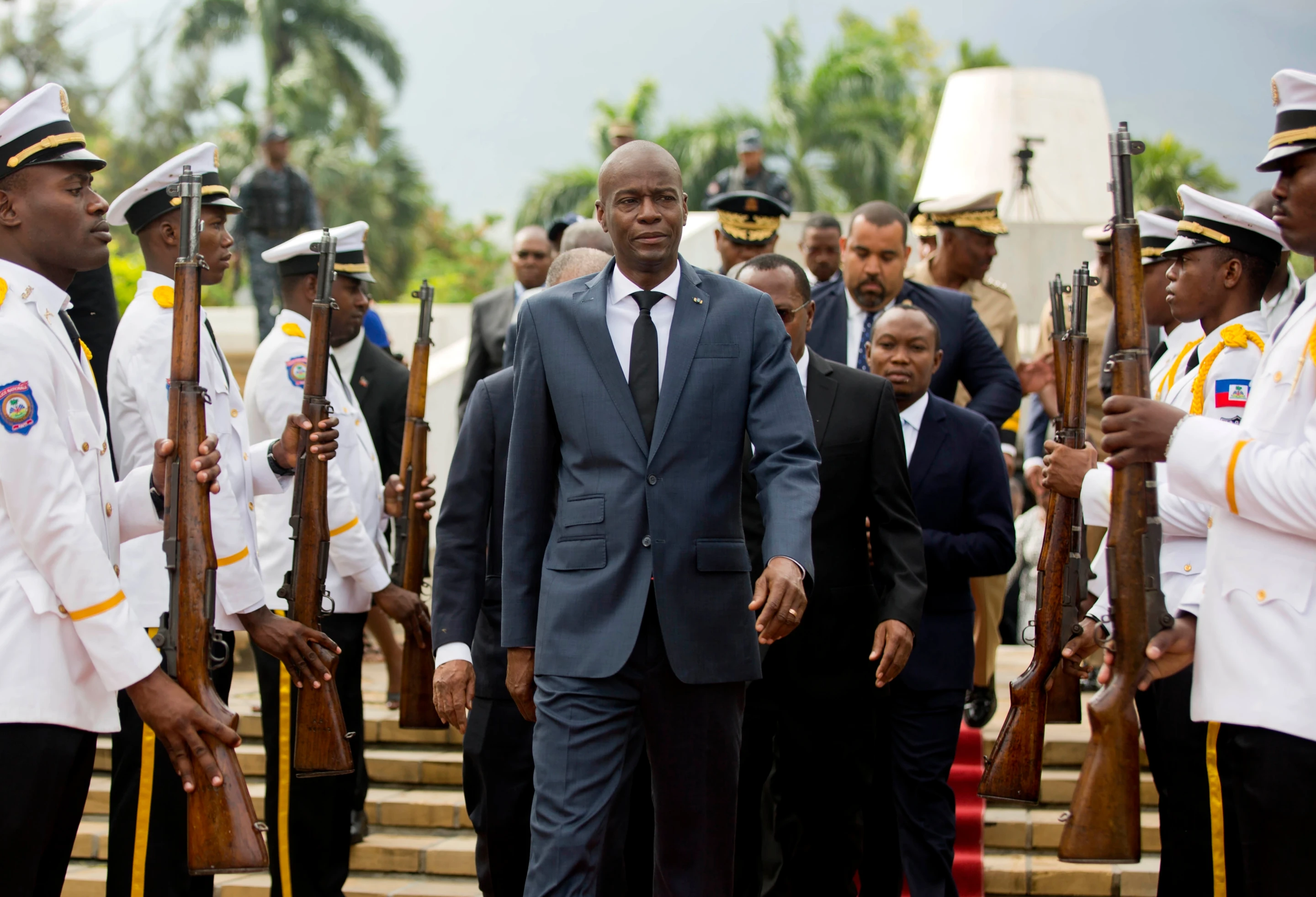
The trial of four men accused of assassinating Haiti's last elected president, Jovenel Moïse, began in Miami, with opening comments from federal prosecutors and defense attorneys. Arcangel Pretel Ortiz, Antonio Intriago, Walter Veintemilla, and James Solages are facing charges. They're accused of conspiring in South Florida to either kidnap or assassinate the Haitian leader. Prosecutors allege that the 2021 death, which plunged Haiti into a severe political crisis, was driven by greed, hubris, and a thirst for power. Assistant United States Attorney Sean McLaughlin presented the case to the jury, asserting that it was a simple matter of the defendants' ambition to seize control and enrich themselves. He explained that the men felt sure they could pull off their scheme because they had a poor understanding of Haiti and its people. But the defense lawyers argued that the investigation, which started in Haiti, was deeply flawed, and their clients had been tricked into taking the blame for what they called an internal coup. Ortiz's attorney, Orlando do Campo, told the jurors that once the detectives went down the wrong path, the entire investigation's validity was compromised. Following Moïse's assassination, Haiti experienced unprecedented instability, with armed gangs becoming increasingly strong and vicious. The four defendants have entered pleas of not guilty. Should they be found guilty, the potential penalties in the United States are life sentences.
The Assassination and Alleged Plot
Jovenel Moïse was slain on July 7, 2021, when a group of about two dozen international mercenaries, mostly from Colombia, assaulted his private mansion near Port-au-Prince. According to authorities, the majority of the operation's planning and financing occurred in South Florida. Prosecutors claim the defendants played a key role in a plan to depose Moïse and install a chosen leader. Ortiz and Intriago were the principals of Counter Terrorist Unit Federal Academy and Counter Terrorist Unit Security, also known as CTU, while Veintemilla was a principal of Worldwide Capital Lending Group. Both enterprises were headquartered in South Florida. Solages was a CTU representative in Haiti and allegedly collaborated with others, notably Christian Sanon, whom conspirators initially favored as Moïse's replacement. Investigators claim the conspirators met in South Florida in April 2021 and decided that once in power, Sanon would award CTU contracts for infrastructure development, military equipment, and security services. Worldwide Capital apparently supported the operation by granting a $175,000 line of credit to CTU and sending monies to co-conspirators in Haiti to purchase ammunition.
Planning the Coup and Shifting Leadership
According to court filings, the conspiracy required months of planning. CTU recruited approximately 20 Colombian nationals with military background, who were initially entrusted with providing protection for Christian Sanon. The group also amassed weapons, protective gear, and other supplies, all while trying to connect with Haitian gangs. Prosecutors allege these actions were part of a broader plan to seize control. By June 2021, however, conspirators apparently realized that Sanon lacked both the constitutional requirements and public support required to become Haiti's president. Consequently, they shifted their backing to Wendelle Coq Thélot, who had previously served as a judge on Haiti's Superior Court. She passed away in January 2025, remaining a fugitive until her death. Defense attorneys provided a different narrative, telling jurors that Sanon approached the defendants earlier in 2021 with a proposal to free Haiti from Moïse, who critics thought had overstayed his presidential mandate. Emmanuel Perez, representing the defense, argued that the group believed they were aiding in a legitimate mission: the arrest of the president. He insisted they believed they were working alongside FBI agents, US Embassy officials, and Haitian government members. Their goal, as they saw it, was to effectuate the legal arrest of a leader they considered had outlived his mandate.
Competing Claims and the Ongoing Investigation
Defense attorneys identified Joseph Félix Badio as the accused mastermind behind Moïse's death. According to the defense, the original plan was to arrest rather than kill the president. Lawyers contended that Moïse had already been slain by those posing as Haitian police officers before the Colombian security force arrived to apprehend him. Solages' attorney, Jonathan Friedman, informed the court that the team had an arrest warrant signed by a judge. That court later declared that the paper was signed under duress, but Friedman insisted the defendants were unaware of this accusation. Martine Moïse, the prosecution's first witness, spoke about her injuries sustained during the attack. U.S. District Judge Jacqueline Becerra expects the case to run more than two months. Several individuals in the United States have already pled guilty to conspiracy charges relating to the assassination and are serving life sentences. Meanwhile, other individuals, including Colombian soldiers and Haitian officials, are facing charges in Haiti, where gang violence, intimidation, and a weak court system have hampered the probe.



Leave a Comment
Your email address will not be published. Required fields are marked *
Latamchronicle
Live, Breaking News Theme