



Argentina Wages Lag Behind Inflation Again
Wage growth in Argentina continues to fall behind inflation, reducing real purchasing power and increasing financial pressure on households.





 ECONOMY
Wages Fail to Keep Up With Inflation
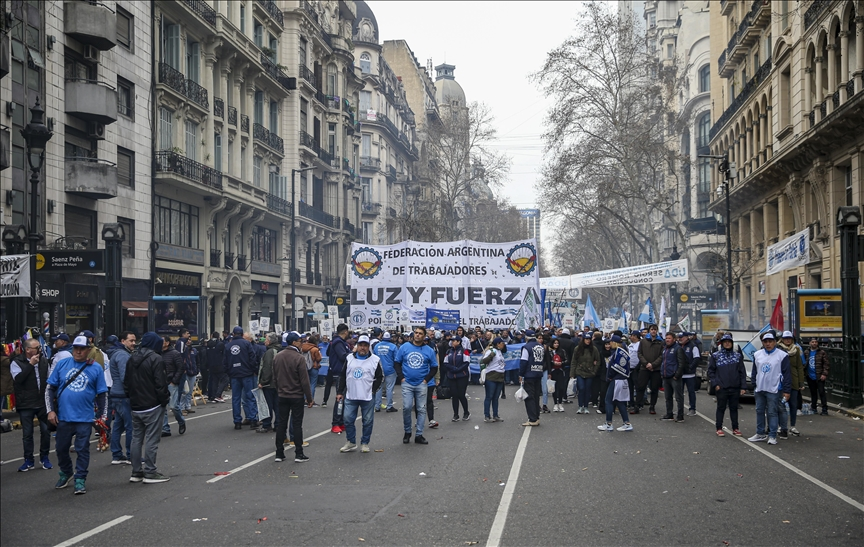
The pay index increased by 2.5% in January, although it stayed below the Consumer Price Index (CPI) for the same time, which was 2.9%. The wage index rose 2.5% in January, but it fell short of the Consumer Price Index (CPI), which rose 2.9% in the same time. As a result, workers' earnings failed to keep up with inflation at the start of the year. The data comes from a report produced by the National Institute of Statistics and Censuses (Indec) and illustrates a dynamic that continues to make it difficult to restore purchasing power in the short term. According to the National Institute of Statistics and Censuses (INDEC), registered earnings increased 2% in January, while inflation remained at 2.8%. This indicates that wages have lost purchasing power for the fifth consecutive month, resulting in a 7.9% real fall during Javier Milei's leadership. Analyzing the performance of the registered industry reveals a 2% gain in the first month of 2026. As a result, the segment has seen five consecutive months in which earnings have fallen below inflation, a trend that has continued since September of last year.
Why This News Matters
Wages are going up on paper, but in real life, people are getting behind. Because inflation is still higher than pay raises, the cost of everyday things is going up faster than incomes are going up. That pressure builds up over time, making it harder for families to pay their bills, save money, or keep their standard of living.
Sector-Wise Wage Performance
This growth was driven by gains of 2.1% in the registered private sector, 1.8% in the public sector, and 4.4% in the unregistered private sector. Monthly pay growth was characterized by uneven increases across sectors. The formal private sector grew by 2.1%, whereas the public sector increased by only 1.8%. In comparison, the informal private sector experienced a 4.4% gain. In the breakdown of the various industries, the unregistered private sector salary was the only one that exceeded January's inflation. Within this category, the registered private sector was 0.8 percentage points behind the CPI, while the public sector had a 1.1 percentage point deficit. This demonstrates a bigger relative loss of income for public sector employees. In the formal sector, public sector salaries decreased the most, gaining only 1.8%, resulting in a real loss of 1%; private sector earnings rose 2.1%, but their buying power declined by 0.7%.
Year-on-Year Trends and Real Wage Decline
Year on year, the pay index rose by 37.7% and was 5.3 percentage points more than the cost of living (32.4%). When broken down by industry, considerable differences arise. The formal private sector increased by 28.5% year on year, while the public sector expanded by 30%, both below inflation. In contrast, the informal private sector experienced a strong increase of 80.6%, which explains the overall outcome. The year-on-year change in earnings was likewise negative: public sector pay increased by 30% against an inflation rate of 32.4%, resulting in a 1.8% real drop in buying power. Wages in the private sector performed considerably worse over the past year, jumping 28.5% but falling by 2.9% in real terms. "These figures are below the year-on-year inflation rate for January, which was around 32%, confirming that the recovery of real wages, although underway, has not yet managed to compensate for the accumulated losses of recent years," Tomás Amerio, an economist, explained.
Broader Economic Impact and Outlook
Despite the severe reduction in salaries, consumption is not recovering: it fell 6.3% in February across various sales channels, according to a report by consulting firm Scentia; at the same time, delinquency among families continues to rise and is at a 20-year high. According to official Central Bank (BCRA) figures, household delinquency rates hit 10.6% in banks. However, the most concerning figure is seen outside of the traditional banking system, where loan defaults in non-financial businesses have already exceeded 27% and are beginning to have a significant impact on fintech companies. Meanwhile, unemployment rose to 7.5% in the fourth quarter of 2025, up 1.1 percentage points from the same period the previous year, according to official data from INDEC. The job market saw a rise in informal work, even as formal employment shrank. Economist Luis Campos pointed out the significant drop in wages over the medium term, with earnings hitting their lowest point in twenty years. Inflation is projected to remain close to 3% in March. This is largely due to the upward pressure from climbing oil prices, along with increases in utility and transportation expenses.
What to Watch Next
The most important question is whether wages can start to rise faster than inflation again. Workers may keep losing ground if inflation stays high, especially if energy and transportation costs keep going up. It's also a good idea to keep an eye on consumer spending and debt levels, since both can show how much stress families are really under.
Related: Read also: Brazil and Argentina Lead Latin America Crypto Boom, MercadoLibre Invests $3.4 Billion in Argentina by 2026, and The Americas: Trade Tensions and Latin America's Role.
Covers macroeconomic trends, financial markets, and global economic policy developments.

Just for You
 ECONOMY
Argentina Launches Milestone 'Passports-for-Investment' Framework to Bolster Central Bank Foreign Reserves
Argentina enacted a landmark citizenship-for-investment decree on October 3, 2026, offering nationality for a …
 ECONOMY
Latin American Mining Summit Warns Community Disputes and Regulatory Bottlenecks Stall Over $54 Billion in Capital Investments
A landmark mining report released on September 29, 2026, revealed that environmental permitting delays and com…
 ECONOMY
Global Rating Agencies and Regional Banks Warn of Fiscal Adjustment Pressures Across Latin America Ahead of October Elections
International financial agencies and regional banks warned on September 28, 2026, that mounting public deficit…
 ECONOMY
Bolivian Congress Approves $1.9 Billion IMF Facility to Address Acute Foreign Currency Shortage
Bolivia's Congress has approved a crucial $1.9 billion IMF and multilateral financing package on September 19,…
Comments (0)
Sign in or create an account to leave a comment.