







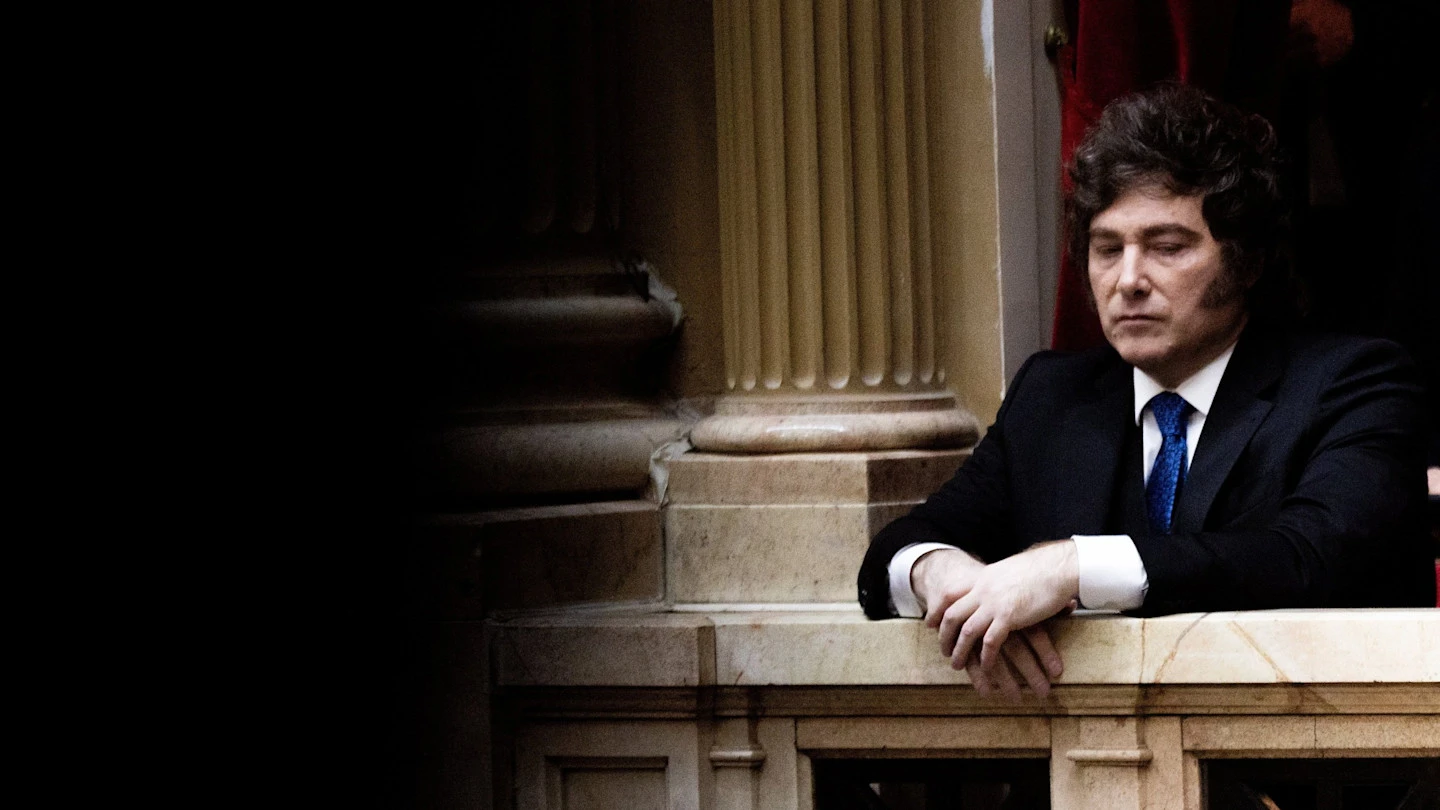
Buenos Aires: Javier Milei publicly defended government spokesperson Manuel Adorni after opposition politicians and media reports raised questions about alleged irregularities tied to Adorni’s financial disclosures and family business activities.
Speaking during an interview on LN+, Milei dismissed the controversy as politically exaggerated and accused critics of trying to manufacture a scandal to damage his administration. Using one of his trademark combative comparisons, Milei said opponents “talked about a waterfall and it turned out to be two little streams of water,” arguing that the accusations were far less serious than initially portrayed.
The president insisted there was no evidence of corruption and framed the backlash as part of a broader political and media campaign against his government.
Why the Controversy Started
The dispute emerged after reports questioned details connected to Adorni’s sworn financial declaration as well as business activities linked to members of his family. Opposition figures and several journalists argued that the government should provide more transparency regarding the finances of senior public officials.
Although no formal corruption charges have been announced, the issue quickly gained political attention because Milei’s administration has repeatedly presented itself as a break from Argentina’s history of corruption scandals and opaque political practices.
The controversy also arrives at a difficult moment for the government, which is already facing intense scrutiny over ethics, transparency, and possible conflicts of interest involving officials close to the president.
Patricia Bullrich Calls for Immediate Disclosure
One of the most politically significant developments came when Security Minister Patricia Bullrich — one of Milei’s strongest allies inside the government — publicly called on Adorni to immediately publish his sworn financial declaration rather than wait for legal deadlines.
Bullrich stressed that transparency is essential for maintaining public confidence and argued that officials should respond rapidly whenever questions arise about their finances or conduct.
She stopped short of accusing Adorni of wrongdoing, but her comments still stood out because they suggested at least some discomfort inside the government over how the issue was being handled publicly.
Bullrich framed the matter as one of political responsibility rather than criminality, saying quick disclosure would help remove doubts and avoid unnecessary damage to the administration.
Her intervention also exposed tensions within Milei’s broader coalition over strategy — particularly over whether the government should respond aggressively to criticism or instead focus on transparency and de-escalation.
Milei Escalates Attacks on Media and Opposition
As the controversy grew, the Milei administration strongly pushed back against both opposition politicians and parts of the Argentine media. Government supporters argued the accusations lacked hard evidence and were being amplified mainly for political purposes.
Milei himself intensified his criticism of journalists during public comments, accusing sections of the press of spreading misinformation and deliberately trying to undermine his presidency.
Officials close to Adorni also defended him publicly and said all required financial records would be presented according to existing legal procedures. They argued the reaction from critics had become disproportionate compared to the available information.
The dispute has now become part of a much wider political conflict between Milei’s government and opposition sectors. Critics accuse the administration of lacking transparency and accountability, while government supporters argue opponents are attempting to obstruct reforms and destabilize Milei politically.
A Larger Debate About Ethics and Transparency
Beyond Adorni himself, the controversy has reopened a broader debate in Argentina over ethics rules, financial disclosures, and public trust in government institutions. Opposition leaders argue the case shows the need for stricter oversight and faster publication requirements for sworn declarations involving senior officials.
Some critics have also accused the government of applying different standards depending on political loyalty — demanding accountability from opponents while reacting defensively when allegations involve allies.
Government supporters reject that argument and instead point to corruption scandals involving previous Peronist administrations, insisting Milei’s government remains far more transparent than many earlier governments in Argentina.
The political stakes are especially high because Milei is still trying to maintain public support while pushing through major economic reforms, austerity measures, and aggressive efforts to reduce inflation. Argentina remains deeply polarized politically, and questions surrounding ethics and transparency continue to carry enormous weight with voters.
For now, Milei appears determined to fully back Adorni and frame the controversy as another battle between his administration and what he often describes as Argentina’s political and media establishment. But the episode has also revealed how sensitive issues of transparency remain — even inside a government that came to power promising to radically change the country’s political culture.