







La Paz: Bolivia is experiencing a growing shift toward electric vehicles as fuel shortages, rising gasoline prices, and concerns over fuel quality push more residents to abandon traditional gasoline-powered cars.
Among them is Simón Huanca, a 53-year-old Indigenous artisan from El Alto, who imported a Chinese electric vehicle to transport both his family and materials for his alpaca wool weaving workshop.
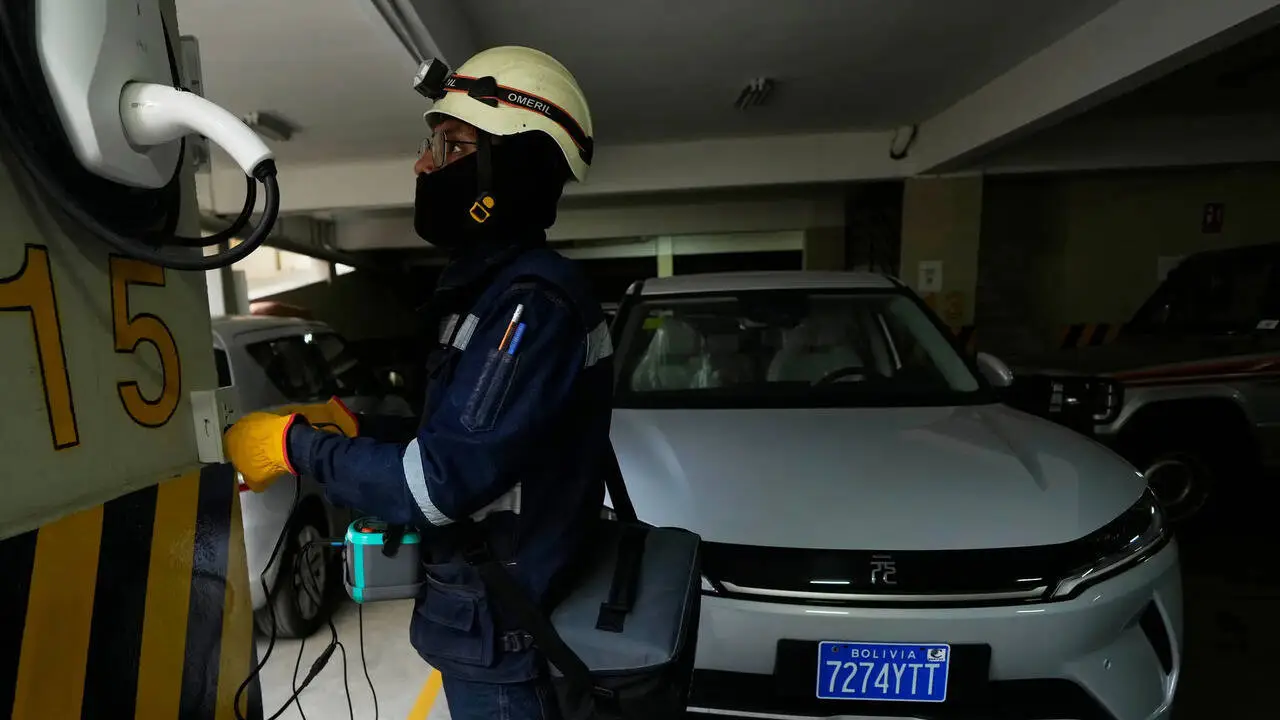
Huanca also installed a charging station in his garage due to the limited number of public charging points available in the La Paz and El Alto metropolitan area.
“Since last year, I’ve been trying to get an electric car to save on costs,” Huanca said while driving through a working-class neighborhood in El Alto.
His decision reflects a broader trend in Bolivia as the country struggles with a worsening energy crisis and soaring fuel prices.
Fuel Crisis Sparks Shift Toward Electric Vehicles
Bolivia’s fuel shortages intensified in 2023 under former President Luis Arce, whose administration maintained fuel subsidies that allowed gasoline and diesel to be sold domestically at prices far below international market rates.
However, Bolivia relies heavily on fuel imports, bringing in around 80% of its diesel and more than half of its gasoline consumption from abroad.
As foreign currency reserves declined, the government struggled to sustain the subsidy program, which reportedly cost the state more than $2 billion annually.
Long lines at gas stations became increasingly common across the country as fuel shortages worsened.
After taking office in December, President Rodrigo Paz repealed the subsidy system, causing fuel prices to nearly double and placing additional financial pressure on Bolivian households.
‘Junk Gasoline’ Controversy Intensifies Public Frustration
Transport workers and drivers later complained that poor-quality gasoline was damaging vehicle engines.
The government alleged sabotage and claimed that gasoline distributed by state-owned company Yacimientos Petrolíferos Fiscales Bolivianos had been contaminated with substances including gum and manganese left behind in storage tanks.
The controversy, widely referred to as the “junk gasoline” scandal, triggered protests, transportation strikes, and the resignation of two senior officials connected to the state oil company.
Public frustration deepened further during the Iran conflict, which raised fears of additional increases in global oil prices and further pressure on Bolivia’s energy supply.
Many Bolivians responded by considering electric vehicles as a long-term alternative to rising fuel costs and shortages.
Electric Vehicle Demand Continues Rising
According to Bolivia’s Single Registry for Tax Administration, the number of electric vehicles in the country increased from about 500 to more than 3,300 over the past five years.
The most rapid growth occurred during the last two years as the fuel crisis intensified.
Although electric vehicles still represent only a small fraction of Bolivia’s roughly 2.6 million registered vehicles, experts say demand is increasing rapidly.
Most electric vehicles imported into Bolivia come from China, followed by the United States.
Electromobility specialist Freddy Koch said the sector’s growth has become “exponential” and predicted that the number of electric vehicles could triple within the next few years.
New Business Opportunities Emerge
The transition toward electric mobility is also creating new economic opportunities.
Electrician Marcelo Laura recently began specializing in the installation of residential and commercial charging stations after recognizing increasing demand from electric vehicle owners.
“A year ago, I thought it was practically impossible to think that people would actually be bringing in electric cars,” Laura said.
The Bolivian government has also removed import tariffs on vehicles, increasing competition among importers and helping lower prices for electric models entering the country.
Despite the limited public charging infrastructure, many Bolivians now see electric vehicles as a practical solution to the country’s ongoing fuel and economic challenges.