







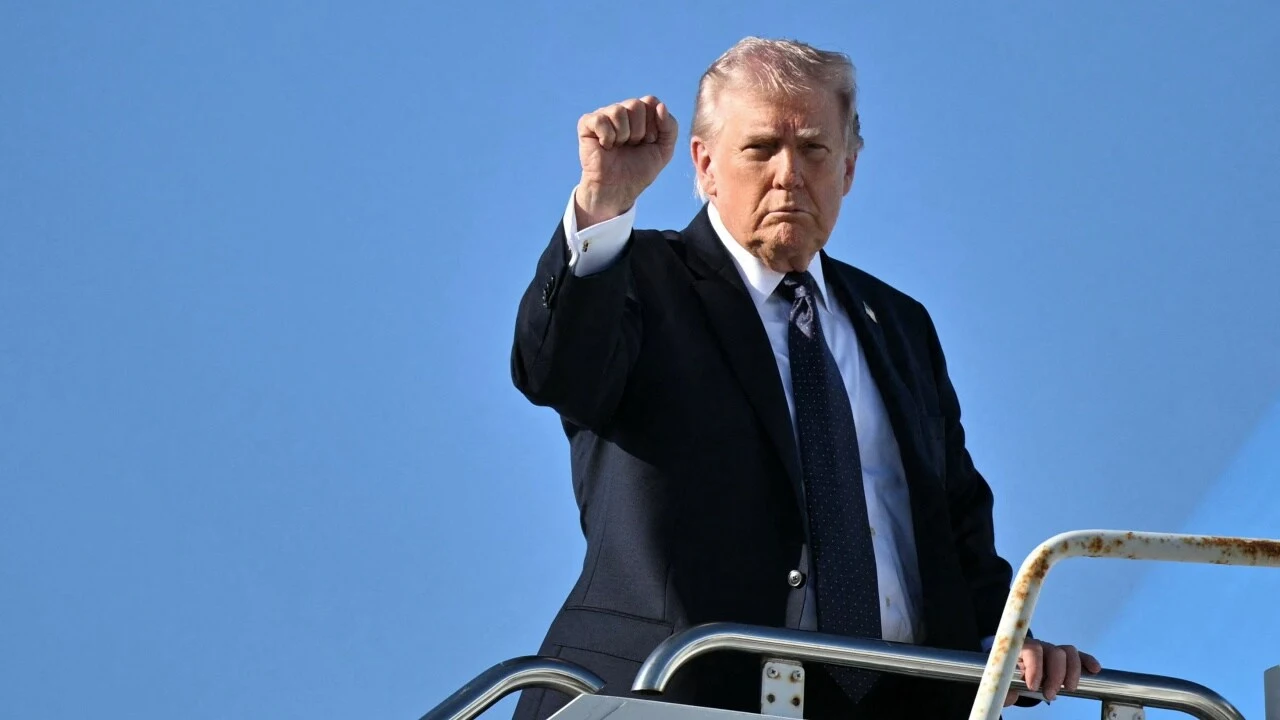
Washington: U.S. President Donald Trump said the ceasefire between the United States and Iran remains in effect despite a major military confrontation in the Strait of Hormuz involving U.S. naval destroyers and Iranian forces.
The United States accused Iran of launching missiles, drones, and small attack boats against three American warships in what officials described as an “unprovoked attack.” Trump later stated that Iran had “trifled with us today” and warned Tehran against further escalation.
Iran, however, blamed the United States for the clash. Iran’s top military command alleged that American forces targeted an Iranian oil tanker and another vessel near the Strait of Hormuz while also conducting aerial attacks against coastal areas.
The incident has raised fresh concerns about the stability of the recently proposed ceasefire agreement between Washington and Tehran.
Exchange of Fire in the Strait of Hormuz
Iranian state media initially reported explosions in the Strait of Hormuz and described the situation as an “exchange of fire” involving enemy forces. Local Iranian outlets also reported explosions in parts of Tehran.
Iran’s military later claimed that U.S. strikes hit coastal locations including Bandar Khamir, Sirik, and Qeshm Island. Iranian officials said their forces responded immediately by attacking American military vessels and claimed they inflicted significant damage.
Meanwhile, U.S. Central Command said Iranian forces launched multiple missiles, drones, and small boats at American destroyers transiting the strategic waterway.
According to the U.S. military, American forces intercepted incoming threats and later struck Iranian missile launch sites, drone facilities, command centers, and surveillance infrastructure connected to the attacks.
Centcom stated that the United States does not seek escalation but remains prepared to defend American personnel and assets in the region.
Trump Warns Iran Over Peace Deal
Following the confrontation, Trump posted on Truth Social that U.S. forces had destroyed several Iranian boats, drones, and missiles and caused “great damage” to Iranian attackers.
The president also renewed pressure on Tehran to finalize a peace agreement quickly.
Trump warned that if Iran failed to sign a deal, the United States could respond with stronger and more violent military action in the future.
Despite the clash, Trump insisted that the ceasefire framework remains active and expressed confidence that the broader conflict could still end rapidly.
Iran Signals Mixed Messages on Negotiations
The latest violence occurred just one day after Iran’s foreign ministry confirmed that Tehran was reviewing a U.S. proposal aimed at ending the conflict.
Reports suggested the White House is attempting to finalize a 14-point memorandum of understanding that could serve as the foundation for future nuclear and security negotiations between both countries.
Pakistan has reportedly been involved in mediation efforts, with Pakistani officials expressing hope that the ceasefire could evolve into a permanent end to hostilities.
However, some Iranian officials publicly rejected the proposal. Iranian parliament member Ebrahim Rezaei described the reported agreement framework as merely a “wish list” and warned that Iran remained prepared to retaliate if its conditions were not met.
Iranian officials also stressed that the country remains on high military alert and warned of severe consequences if additional attacks occur.
Regional Tensions Continue to Rise
In another sign of instability, the United Arab Emirates announced early Friday that its air defense systems were actively responding to missile and drone threats linked to Iran.
The Strait of Hormuz remains one of the world’s most strategically important energy corridors, with a significant percentage of global oil shipments passing through the narrow waterway.
Any prolonged military escalation in the area could severely impact global energy markets and regional security.
An Israeli source told the BBC there was no Israeli involvement in the latest confrontation.
Nuclear Dispute Remains Central Issue
The dispute over Iran’s nuclear program continues to be one of the largest obstacles in negotiations between Washington and Tehran.
Trump has repeatedly claimed that Iran has agreed not to pursue nuclear weapons, although Iranian authorities have not publicly confirmed such an agreement.
Earlier this month, Trump warned that if Iran failed to accept U.S. conditions, the bombing campaign against Iranian targets could resume at a much higher intensity.
U.S. Secretary of State Marco Rubio previously stated that the initial military operation against Iran had achieved its objectives, though tensions between both countries remain extremely fragile.