








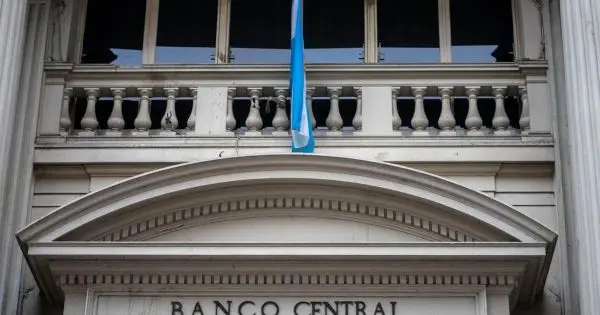
BUENOS AIRES, Argentina – Argentina's Chamber of Deputies is poised for a pivotal debate this week on a proposed reform to the central bank's charter, a cornerstone initiative of President Javier Milei's administration. The legislation seeks to fundamentally alter the relationship between the Banco Central de la República Argentina (BCRA) and the Treasury, explicitly barring the monetary authority from financing the fiscal deficit through the issuance of new money. Furthermore, it aims to reinstate the preservation of the national currency's value as the central bank's sole and paramount objective.
The proposed changes, scheduled for discussion on Wednesday, represent a bold attempt to dismantle one of the primary drivers of Argentina's chronic inflation, which has plagued the South American nation for decades. President Milei, a self-proclaimed libertarian economist, has consistently blamed the practice of printing money to cover government spending for the country's economic instability and soaring prices.
A Radical Shift in Monetary Philosophy
For generations, Argentina has grappled with cycles of high inflation, currency depreciation, and sovereign debt crises. A recurring theme in this economic turmoil has been the central bank's role in monetising the fiscal deficit – essentially, creating pesos to cover the government's spending gaps when tax revenues fall short and borrowing from markets is either too expensive or impossible. This practice, while providing short-term relief to the Treasury, floods the economy with new money, eroding the purchasing power of the existing currency and fuelling inflation.
Milei's government argues that by legally severing this link, Argentina can break free from its inflationary spiral. The reform intends to force greater fiscal discipline upon the government, compelling it to balance its budget through spending cuts or revenue generation, rather than relying on the central bank as an ATM. Restoring the preservation of currency value as the BCRA's sole objective would align Argentina's monetary policy framework with more orthodox models adopted by many stable economies globally, including several of its Latin American neighbours.
Historical Context and Milei's Mandate
Argentina's economic history is littered with failed attempts to tame inflation. From the hyperinflation of the late 1980s to the convertibility plan of the 1990s and subsequent devaluations, the country has experimented with various monetary regimes. The current reform comes at a time when Argentina is experiencing triple-digit annual inflation, a figure that reached over 200% at the end of 2023, severely impacting the daily lives of its citizens.
President Milei campaigned on a platform of radical economic shock therapy, promising to dollarize the economy, drastically cut public spending, and eliminate the central bank. While full dollarization remains a long-term aspiration, this central bank reform is seen as a crucial first step towards achieving monetary stability and fiscal responsibility. His electoral victory in November 2023 was largely seen as a mandate from an electorate weary of economic volatility and political stagnation.
Legislative Hurdles and Political Landscape
Despite the government's strong conviction, passing the reform through the Chamber of Deputies presents significant political challenges. Milei's party, La Libertad Avanza (LLA), holds a minority in both houses of Congress, necessitating broad cross-party support to enact its legislative agenda. The experience with the 'Omnibus Law' – a sweeping package of reforms that faced substantial amendments and delays – highlighted the difficulties the government faces in navigating the complex Argentine political landscape.
To secure passage, the government will likely need to forge alliances with centrist and centre-right factions, such as PRO (Propuesta Republicana) and segments of the Radical Civic Union (UCR). The debate will undoubtedly be intense, with opposition parties scrutinizing the details and potential implications of such a drastic change. Concerns may be raised about the central bank's loss of flexibility to respond to economic shocks, the potential for deeper austerity measures, and the impact on social programs if the Treasury faces an absolute hard budget constraint.
Potential Economic Impact and Regional Parallels
If enacted, the reform could have profound economic consequences for Argentina. In the short term, the government would be forced to accelerate its fiscal adjustment, potentially leading to further cuts in public spending and subsidies. While this could cause immediate economic contraction and social strain, proponents argue it is a necessary step towards long-term stability.
In the medium to long term, the prohibition on monetary financing is expected to contribute to a significant reduction in inflation, restore confidence in the peso, and potentially attract foreign investment. A more stable macroeconomic environment could lower borrowing costs for the government and private sector, fostering sustainable economic growth.
Argentina's proposed reform draws parallels with other Latin American nations that have strengthened central bank independence to combat inflation. Countries like Chile, Peru, Mexico, and Brazil have established central banks with clear mandates focused on price stability, largely independent of political influence. These nations have generally achieved lower and more stable inflation rates compared to Argentina, providing a regional blueprint for the potential benefits of such reforms.
However, the success of such a policy ultimately hinges on the government's ability to maintain fiscal discipline. Without a sustained commitment to balancing the budget, merely barring the central bank from financing the deficit might lead to other forms of financial distress, such as increased reliance on external debt or domestic bond markets, which could themselves become unsustainable.
A Defining Moment for Milei's Presidency
The vote on the central bank reform is more than just a legislative proceeding; it is a defining moment for President Milei's economic program and his nascent presidency. Its passage would signal a significant victory for his administration, demonstrating his ability to translate his radical vision into concrete policy and laying a crucial foundation for his broader economic agenda.
Conversely, a failure to pass the reform, or its significant watering down, could undermine confidence in his government's capacity to implement fundamental changes. As Argentina stands at this economic crossroads, the outcome of this week's debate will reverberate not only through its financial markets but also across the wider Latin American region, where many nations continue to seek sustainable paths to economic stability and growth.