







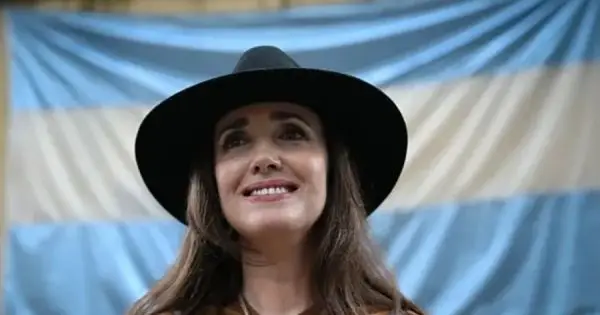
Argentina’s Vice-President, Victoria Villarruel, has once again publicly distanced herself from the economic direction of President Javier Milei’s administration, voicing profound concern over the escalating unemployment and financial precarity afflicting Argentine households. Speaking at the opening of Expo Venado 2026, a prominent agricultural fair in Venado Tuerto, Santa Fe province, Villarruel delivered a stark assessment of the nation’s social landscape.
“I am extremely worried about Argentines who today have no work or who cannot make ends meet,” she stated, her words resonating with a populace grappling with the immediate consequences of Milei’s drastic fiscal adjustment program. Her comments serve as the latest indication of a growing ideological chasm within the ruling La Libertad Avanza (LLA) coalition, a dynamic that analysts suggest could have significant implications for the government’s stability and its ability to push through further reforms.
A Voice of Dissent Amid Economic “Shock Therapy”
Villarruel’s remarks are not an isolated incident. Since taking office in December 2023, the Vice-President, a figure with a strong base among conservative voters and military families, has on several occasions signaled a more cautious or socially sensitive approach compared to Milei’s uncompromising libertarian agenda. While both campaigned on a platform of radical change, their priorities and rhetoric have often diverged, particularly on issues concerning human rights, security, and now, the immediate social impact of economic policies.
President Milei’s government embarked on an ambitious “shock therapy” program designed to tackle Argentina’s entrenched economic crises, primarily hyperinflation and a massive fiscal deficit. Key measures have included a sharp devaluation of the peso, severe cuts to public spending, elimination of energy and transport subsidies, and extensive deregulation across various sectors. The stated goal is to achieve fiscal balance, curb inflation, and attract foreign investment by shrinking the state’s role in the economy.
While the government has touted some early successes, such as a slowdown in monthly inflation rates and a reported fiscal surplus in recent months, these gains have come at a steep social cost. The drastic reduction in public spending has led to widespread job losses in both the public and private sectors, a significant decline in real wages, and a surge in poverty rates. Economic activity has contracted sharply, with industries struggling against reduced consumer demand and increased operational costs.
The Human Cost of Austerity
Villarruel’s concerns reflect the harsh reality for millions of Argentines. Data from various sources, including the National Institute of Statistics and Census (INDEC) and private consultancies, paint a grim picture. Unemployment figures have begun to tick upwards, and those who retain jobs often find their purchasing power severely eroded by cumulative inflation. Basic goods and services, once subsidized, are now priced out of reach for many, pushing segments of the middle class into poverty.
The agricultural sector, represented at Expo Venado 2026, is a cornerstone of Argentina’s economy, particularly in provinces like Santa Fe. While Milei’s policies aim to boost exports and reduce state interference in agricultural markets, the broader economic downturn affects domestic demand and creates uncertainty for producers. Villarruel’s choice of venue for her comments was therefore strategically significant, speaking to a demographic often seen as more pragmatic and less ideologically driven than segments of the urban electorate.
Political Implications and Future Trajectories
The Vice-President’s public expressions of worry create a complex dynamic within the government. On one hand, they could be interpreted as a genuine humanitarian concern, offering a more empathetic face to an administration often perceived as rigid and unyielding. On the other, they could be seen as a strategic maneuver to carve out a distinct political identity, potentially positioning Villarruel for future leadership roles should Milei’s radical experiment falter or face significant public backlash.
For the LLA, such internal disagreements, particularly from the second-highest office, could complicate governance. The coalition already operates without a strong majority in Congress, relying on alliances with other center-right parties to pass legislation. A perceived rift could weaken its negotiating position and embolden opposition forces.
Milei’s supporters argue that the current hardships are a necessary, albeit painful, stage in the country’s recovery, a “light at the end of the tunnel” that will eventually lead to sustainable growth. However, critics, including Villarruel implicitly, emphasize the immediate suffering and question the sustainability of policies that push a significant portion of the population into destitution.
As Argentina navigates this period of profound economic transformation, the internal dialogue within the ruling party, particularly the concerns voiced by its Vice-President, highlights the intense political and social pressures facing the Milei administration. The coming months will reveal whether these worries translate into a shift in policy or merely underscore the growing division on how best to steer the nation through its ongoing crisis.