






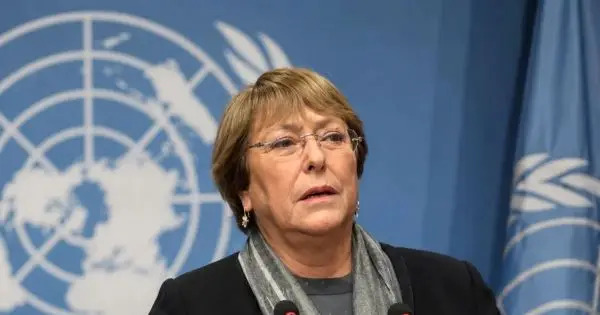
NEW YORK – Former Chilean President Michelle Bachelet has emerged as a prominent contender in the race for the next United Nations Secretary-General, securing a fourth-place finish in the Security Council's initial informal straw poll. The behind-closed-doors vote, held in New York on Thursday, offers an early but crucial indicator of support among the world’s most powerful diplomatic body, injecting fresh optimism into Latin American aspirations for global leadership.
Bachelet, a two-time president of Chile and former UN High Commissioner for Human Rights, has long been considered a formidable candidate due to her extensive international experience, diplomatic acumen, and commitment to human rights and multilateralism. Her performance in this first poll, ahead of an anticipated 'Uruguay debate' within the Security Council, underscores the growing influence and potential for Latin America to place one of its own at the helm of the world organization.
A Strong Start Amidst Opaque Processes
The selection of a UN Secretary-General is a notoriously opaque process, beginning with informal straw polls conducted by the 15-member Security Council. These polls involve members voting 'encourage', 'discourage', or 'no opinion' for each candidate. While the exact vote counts remain confidential, a fourth-place showing for Bachelet indicates a solid base of support and positions her favorably amongst a field of seasoned international diplomats.
For Latin America, Bachelet’s strong initial performance is particularly significant. The region has only seen one Secretary-General in the UN's history – Peru's Javier Pérez de Cuéllar, who served from 1982 to 1991. A successful bid by Bachelet would not only break a long hiatus but also signify a renewed recognition of Latin America's role in addressing global challenges, from climate change and sustainable development to peace and security.
Bachelet's Unique Credentials and Regional Resonance
Michelle Bachelet's career trajectory makes her an exceptionally well-suited candidate. Beyond her two non-consecutive terms as President of Chile (2006-2010 and 2014-2018), she served as the first Executive Director of UN Women and, most recently, as the UN High Commissioner for Human Rights from 2018 to 2022. Her tenure in these roles saw her navigate complex geopolitical landscapes, advocate for vulnerable populations, and promote international cooperation on sensitive issues.
Her experience as a head of state provides a unique perspective on the intricate balance between national sovereignty and international obligations, a quality highly valued in the Secretary-General role. Furthermore, her background as a physician and former Minister of Defense adds layers of practical and strategic understanding to her profile. Within Latin America, she commands widespread respect, often seen as a unifying figure capable of bridging ideological divides, which could translate into crucial regional backing for her candidacy.
The Road Ahead: Diplomatic Maneuvering and Regional Unity
The straw polls are just the beginning of a lengthy and intricate selection process. Future polls will likely see shifts in support as candidates refine their campaigns and diplomatic negotiations intensify. Ultimately, the Security Council will recommend a single candidate to the General Assembly for approval, but this recommendation requires the consensus of the five permanent members (China, France, Russia, the United Kingdom, and the United States), each holding veto power.
For Bachelet, the challenge will be to consolidate and expand her support, particularly among these permanent members. Her track record as a pragmatic leader and a vocal advocate for human rights, while generally lauded, could also present complexities depending on the political sensitivities of various member states. However, her ability to engage across the political spectrum could prove a significant asset.
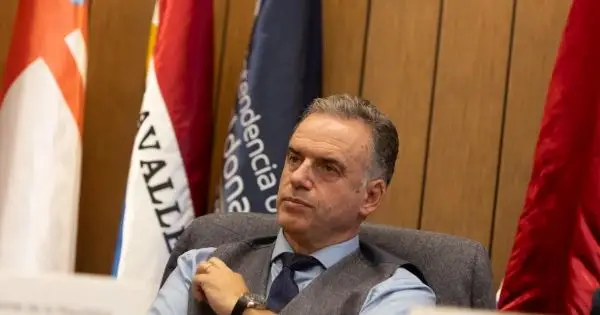
The mention of an upcoming 'Uruguay debate' in the Security Council further highlights the active engagement of Latin American nations in global diplomatic arenas. While the specific agenda of this debate remains undisclosed, it underscores the ongoing presence and influence of countries like Uruguay within the UN's highest decision-making body, potentially providing another platform for regional issues and candidates to gain visibility and support.
Latin America's Stake in Global Governance
A successful bid by a Latin American candidate, particularly one with Bachelet's profile, would resonate deeply across the region. It would symbolize a renewed commitment to multilateralism and the principles of the UN Charter, particularly at a time when global cooperation faces numerous headwinds. Her leadership could provide a distinct voice that understands the unique challenges and opportunities facing developing nations, advocating for equitable solutions and promoting inclusive development.
Moreover, having a Latin American Secretary-General could elevate regional priorities on the global agenda, fostering greater international attention and resources for issues such as climate resilience in the Amazon, economic stability in vulnerable nations, and strengthening democratic institutions across the continent. It would also inspire a new generation of Latin American diplomats and leaders, reinforcing the region's commitment to global governance.
As the informal polling process continues, the diplomatic community will be closely watching Bachelet's trajectory. Her fourth-place finish is more than just a number; it's a powerful signal of her viability and the tangible possibility that Latin America could once again lead the world's most vital international organization, shaping its direction in an increasingly complex global landscape.