







BRASÍLIA – Brazil is embarking on a profound re-evaluation of its approach to land management and wildfire prevention in the vast and ecologically vital Cerrado savanna. For decades, environmental officials adhered to a strict zero-fire policy, believing that any burning was detrimental to the region’s biodiversity. However, a series of increasingly devastating wildfires, exacerbated by climate change and the unintended consequences of fuel accumulation, has prompted a significant paradigm shift: the integration of Indigenous fire practices into national wildfire strategy.
The Cerrado, often dubbed an “inverted forest” due to its deep root systems, is the world's most biodiverse savanna, home to thousands of endemic species and crucial for Brazil’s water security. It spans over two million square kilometres, covering nearly a quarter of the country, and acts as a carbon sink of global importance. Yet, it is also one of Brazil’s most threatened biomes, facing relentless pressure from agricultural expansion, cattle ranching, and, increasingly, uncontrollable mega-fires.
The Flaws of a Zero-Fire Doctrine
The zero-fire strategy, while well-intentioned, often overlooked the evolutionary role of fire in the Cerrado ecosystem. Many native plants in the savanna are pyrophytes, adapted to and even dependent on periodic low-intensity fires for germination, nutrient cycling, and maintaining a healthy landscape. By suppressing all fires, environmental agencies inadvertently allowed an unprecedented build-up of flammable vegetation, creating a tinderbox ready to ignite during the dry season. When fires did inevitably start, often due to human activity or lightning, they were far more intense, destructive, and difficult to control, scorching vast tracts of land and incinerating species that might otherwise survive a cooler, more natural burn.
“The zero-fire policy, despite its scientific backing in some contexts, proved counterproductive in the Cerrado,” explains Dr. Helena Santos, an ecological fire expert at the University of Brasília. “It was a blanket approach that ignored the specific ecological needs and historical fire regimes of this unique biome. We created conditions for mega-fires, not prevented them.”
Indigenous Wisdom: A Path Forward
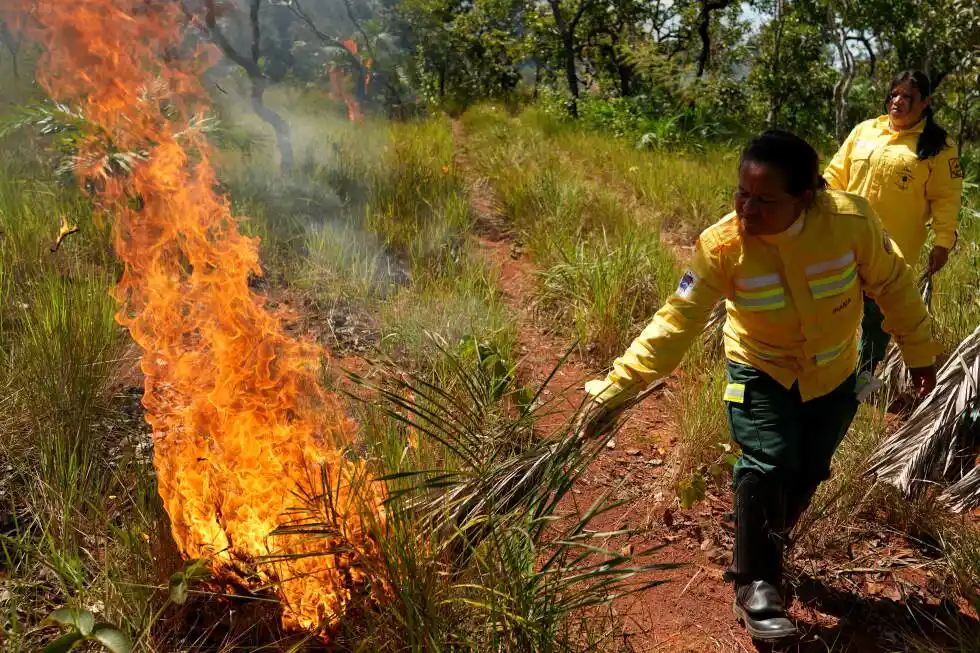
In stark contrast to the conventional approach, Indigenous communities living in the Cerrado for millennia have developed sophisticated fire management techniques rooted in deep ecological understanding. These practices, often referred to as ‘traditional ecological knowledge’ (TEK), involve carefully planned, low-intensity burns during specific times of the year, creating a mosaic of burnt and unburnt areas.
These controlled burns, often called ‘cool fires,’ serve multiple purposes: they clear undergrowth, promote the growth of specific plants essential for food and medicine, create firebreaks to protect villages, and prevent the accumulation of fuel that could lead to larger, more destructive wildfires. For Indigenous peoples, fire is not just a tool but an integral part of their cultural identity, land stewardship, and spiritual connection to the land.
“Our ancestors have always used fire to care for the land,” says Chief Aritana Yawalapiti, an Indigenous leader from the Xingu Indigenous Park, a region that has successfully implemented traditional fire management. “We know when to burn, how to burn, and why. It is about balance, not destruction.”
Government Collaboration and Pilot Programs
Recognising the failures of past strategies and the efficacy of Indigenous methods, Brazilian environmental agencies, including the Brazilian Institute of Environment and Renewable Natural Resources (IBAMA) and the Chico Mendes Institute for Biodiversity Conservation (ICMBio), are now actively collaborating with Indigenous communities. Pilot programs are underway in several Indigenous territories and protected areas across the Cerrado, integrating traditional burning practices into official fire management plans.
These initiatives involve training environmental agents in Indigenous fire techniques, fostering direct dialogue between government agencies and tribal elders, and developing co-managed fire strategies. The results have been promising: areas managed with Indigenous fire practices tend to experience fewer large, uncontrolled wildfires, greater biodiversity, and healthier ecosystems compared to areas under the strict zero-fire regime.
“This shift represents a crucial step towards reconciliation with both the land and its original custodians,” stated a spokesperson for ICMBio. “We are learning that effective conservation often means listening to those who have lived in harmony with these environments for generations. It’s about adopting a more nuanced, adaptive management approach.”
Challenges and the Road Ahead
Despite the growing recognition of Indigenous fire practices, implementing this new strategy on a wide scale presents significant challenges. Bureaucracy, limited funding, and the need to overcome ingrained institutional resistance to change are formidable hurdles. There is also the urgent need to address the broader drivers of deforestation and climate change, which continue to put immense pressure on the Cerrado.
Furthermore, the legal and regulatory frameworks for controlled burning need to be carefully refined to distinguish between destructive arson and beneficial traditional practices. Educating the public and local communities about the benefits of managed fire is also crucial to gain widespread acceptance and support.
The success of this evolving strategy in the Cerrado holds broader implications for Latin America. Many countries in the region possess similar savanna and dry forest ecosystems, often inhabited by Indigenous communities with their own fire management traditions. Brazil's experience could serve as a vital case study, demonstrating how integrating traditional ecological knowledge can offer more resilient and sustainable solutions to environmental challenges across the continent.
As the world grapples with the escalating crisis of climate change and extreme weather events, the Cerrado’s shift from a suppressive, zero-fire doctrine to one that embraces ancient wisdom offers a glimmer of hope. It underscores the profound value of Indigenous knowledge in forging a more sustainable future, not just for Brazil, but for global biodiversity conservation.