







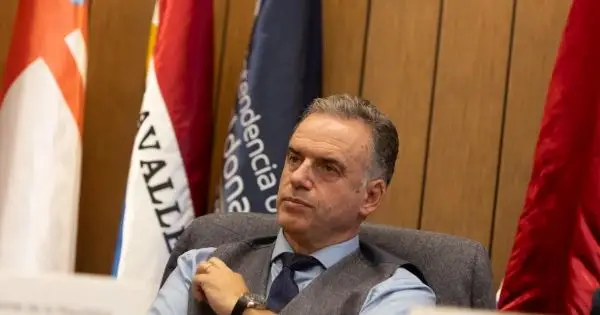
MONTEVIDEO – President Yamandú Orsi’s administration is struggling to meet the initial hopes of the Uruguayan populace, with a significant 49% of those surveyed indicating that his government is performing below the expectations they held at the start of his term. This sobering assessment comes from the latest poll conducted by the consultancy Factum, covering the third two-month period of 2026.
The study, which involved fieldwork between June 2 and 20 and was subsequently released by VTV Noticias, paints a picture of sustained erosion in public confidence. Since President Orsi, a prominent figure from the left-leaning Broad Front (Frente Amplio), took office in March 2025 following his victory in the 2024 general elections, perceptions of his government's effectiveness have steadily declined.
The Orsi Presidency: High Hopes and Mounting Challenges
Yamandú Orsi, a former Intendant of Canelones, ascended to the presidency with a mandate for change and a promise to address key social and economic disparities. His victory marked a return to power for the Broad Front, following a five-year term under the center-right National Party’s Luis Lacalle Pou. Orsi's campaign was built on pledges to boost employment, control inflation, strengthen public services, and enhance social welfare programs, resonating deeply with a segment of the electorate seeking a more interventionist state and greater equity.
At the outset of his administration, Orsi enjoyed a customary honeymoon period, buoyed by the enthusiasm of his base and a general optimism for fresh leadership. However, the Factum poll results suggest that this initial goodwill has dissipated, replaced by a growing sense of disappointment among nearly half of the population.
The 49% figure represents a critical barometer of public sentiment, signaling that a substantial portion of the electorate feels the government has not delivered on its ambitious agenda. While the poll does not delve into specific reasons for this shortfall in detail, analysts point to a confluence of factors both domestic and international that could be contributing to the public’s waning patience.
Economic Headwinds and Social Pressures
Uruguay, often lauded for its political stability and robust democratic institutions, is not immune to regional and global economic fluctuations. The Orsi administration inherited an economy grappling with persistent inflationary pressures and the lingering effects of global supply chain disruptions. Despite efforts to stimulate growth and control prices, the cost of living remains a significant concern for many households.
Economists suggest that the government's ability to fulfill its campaign promises has been hampered by these economic realities. High expectations regarding job creation, particularly in sectors struggling to recover, may not have materialized at the pace or scale anticipated. Furthermore, the fiscal constraints inherent in a small, open economy like Uruguay's limit the government's room for expansive social spending, potentially frustrating those who expected a rapid transformation of public services.
Security is another perennial issue in Latin America, and Uruguay is no exception. While the Lacalle Pou administration had made strides in certain areas of public safety, the perception of insecurity remains a powerful driver of public opinion. If the Orsi government has not demonstrated tangible improvements in this area, it could contribute to the overall sentiment of unmet expectations.
A Broader Regional Context
The challenges faced by President Orsi are not unique to Uruguay. Across Latin America, left-leaning governments that came to power on platforms of significant social change have frequently encountered difficulties in translating their ambitious agendas into immediate, tangible improvements for their citizens. High expectations, coupled with complex economic realities and deeply entrenched structural issues, often lead to a rapid erosion of initial public support.
Governments in neighboring Argentina and Brazil, for instance, have also grappled with inflation, social unrest, and the delicate balance between fiscal responsibility and social expenditure. Uruguay’s relative stability often sets it apart, but it is deeply integrated into the regional economy, making it susceptible to the economic health of its larger neighbors.
Looking Ahead: The Road for Orsi
The Factum poll serves as a clear warning sign for the Orsi administration, signaling the need for a strategic re-evaluation and a renewed focus on communication and policy implementation. A sustained deterioration in public perception, if left unaddressed, could significantly undermine the government's mandate and its ability to govern effectively in the latter half of its term.
For the Broad Front, these findings underscore the complexities of governing after a period in opposition. While the party's core ideology emphasizes social justice and state intervention, the practicalities of managing an economy and meeting diverse public demands require pragmatic and often difficult choices. The challenge for President Orsi will be to recalibrate his administration's approach, demonstrating concrete progress in key areas while managing public expectations more effectively.
Political observers anticipate that the government will likely respond by intensifying its efforts to highlight achievements, particularly in social programs and economic stabilization, and by engaging in more direct dialogue with the public to explain the constraints and complexities of policy implementation. The coming months will be crucial for President Orsi to regain public trust and demonstrate that his administration can indeed deliver on the promises that propelled him to power.