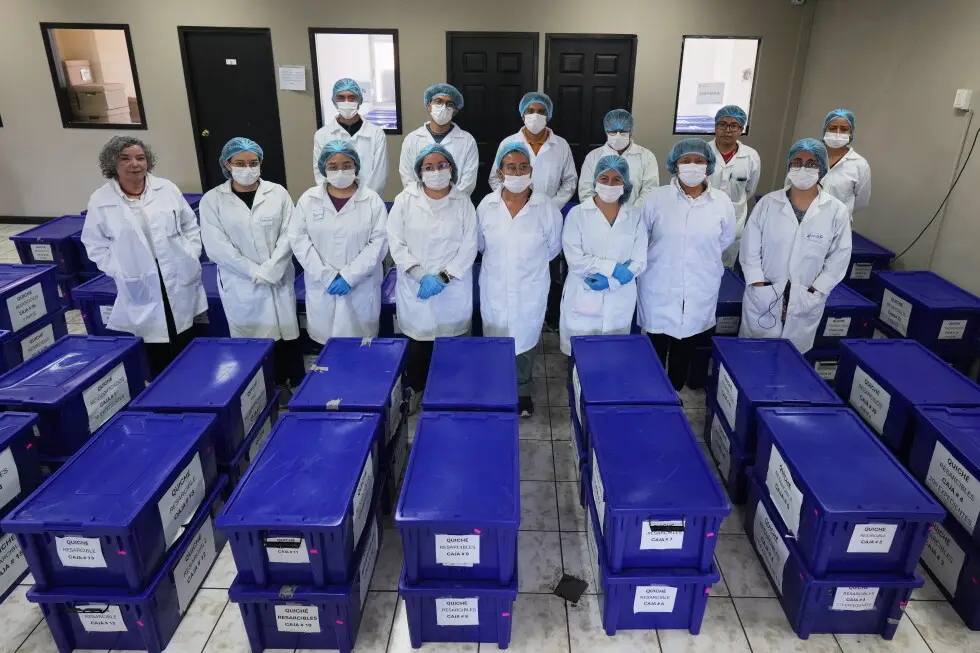








LIMA, Peru – In a dramatic turn that has gripped the nation, leftist candidate Roberto Sánchez has overtaken conservative rival Keiko Fujimori in Peru’s presidential runoff, as the National Office of Electoral Processes (ONPE) announced approximately 95% of the tally sheets had been processed. Sánchez now holds a slender lead, securing around 50.1% of the vote against Fujimori’s 49.9%, a difference of some 41,000 ballots.
This nail-biting count underscores the deep ideological and social divisions within Peru, with the election described by observers as being decided “vote by vote.” However, the final chapter of this electoral saga is far from written. The votes of Peruvians residing abroad, a significant demographic historically known to favor right-leaning candidates, have yet to be fully counted, introducing a crucial element of uncertainty into an already volatile political landscape.
A Nation Divided, A Count Unfolding
The presidential contest has pitted two starkly different visions for Peru against each other. Roberto Sánchez, a former teacher and union leader, has emerged as a symbol of the rural and working-class discontent that has simmered beneath the surface of Peru’s often-turbulent politics. His campaign, aligned with the broader left, has resonated with promises of constitutional reform, increased state control over key economic sectors, and a redistribution of wealth to address long-standing inequalities.
Conversely, Keiko Fujimori, daughter of controversial former president Alberto Fujimori, represents the conservative establishment. Her platform emphasizes free-market policies, law and order, and a return to perceived stability. Despite facing multiple corruption investigations and having lost two previous presidential runoffs, Fujimori has consistently commanded a loyal base, particularly among urban middle classes and business sectors who fear a radical shift to the left.
The initial stages of the vote count saw Fujimori holding a lead, reflecting a pattern often observed in Peruvian elections where urban and coastal votes are tallied first. As ballots from more rural and remote areas began to trickle in, Sánchez steadily closed the gap, eventually surging ahead as the count neared its completion. This shift reflects the geographic and socioeconomic fault lines that define Peruvian politics, with Sánchez drawing strong support from the Andean highlands and poorer regions.
The Pivotal Overseas Vote
With a mere 41,000-vote margin separating the candidates, the uncounted overseas ballots become the decisive factor. Millions of Peruvians live abroad, with significant communities in the United States, Spain, Argentina, and other Latin American countries. Historically, these expatriate voters have leaned conservative, often driven by concerns over economic stability and a desire to see a familiar political trajectory for their homeland.
Analysts suggest that Fujimori would need to secure a significant majority of these remaining votes to overcome Sánchez’s current lead. The exact number of overseas ballots yet to be processed is substantial enough to potentially reverse the outcome, turning an already tense situation into a high-stakes waiting game. Both campaigns are undoubtedly scrutinizing these numbers closely, preparing for potential legal challenges regardless of the final official pronouncement.
Peru's Path Through Instability
This election unfolds against a backdrop of profound political instability in Peru. The nation has seen five presidents in just five years, a testament to the deep-seated divisions and constant clashes between the executive and legislative branches. The COVID-19 pandemic has exacerbated existing social and economic woes, with Peru suffering one of the world's highest per capita death tolls and a severe economic contraction. Public frustration with the political class is at an all-time high, fueling anti-establishment sentiment that both candidates, in their own ways, have sought to harness.
A Sánchez presidency would likely usher in a period of significant policy shifts, potentially including reforms to the constitution – a document largely crafted during Alberto Fujimori’s tenure in the 1990s. Such moves would face fierce opposition from a divided Congress and could spark further political gridlock. For Fujimori, a victory would represent a remarkable political comeback, but she would similarly face a highly polarized nation and the ongoing scrutiny of her past legal troubles.
The close nature of this election is also indicative of a broader trend across Latin America, where voters are increasingly rejecting traditional political parties and embracing candidates from both the far-left and far-right in search of solutions to persistent inequality, corruption, and economic stagnation. From Chile to Colombia, the region is witnessing a realignment of political forces, and Peru's election is a critical piece of this evolving puzzle.
The Road Ahead
As ONPE continues its meticulous work, the eyes of Peru – and indeed, Latin America – remain fixed on Lima. The outcome will not only determine the next leader of a nation grappling with immense challenges but also set the tone for its political and economic future. Whatever the final result, the next Peruvian president will inherit a deeply fractured society, a struggling economy, and the daunting task of uniting a populace that has just delivered one of the region’s most suspenseful electoral contests in recent memory.