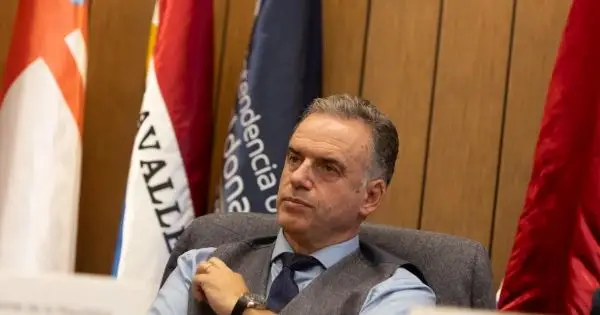








MONTEVIDEO – Uruguay's Partido Nacional (National Party), currently at the helm of the South American nation's government, has set its sights on a long-term political objective: a return to power in 2030. The declaration came from Álvaro Delgado, president of the party's board, who rallied members on Sunday to "build the history of the future" and ensure Uruguay can "find direction again."
Delgado's pronouncement, while seemingly distant, outlines a strategic vision for the centre-right party, which currently leads the 'Coalición Multicolor' (Multicolor Coalition) government with President Luis Lacalle Pou. The statement implies a forward-looking perspective that transcends the immediate electoral cycle, prompting analysis of the party's confidence, challenges, and long-term planning in Uruguay's robust democratic landscape.
A Look at the Partido Nacional's Current Stance
It is important to clarify the Partido Nacional's current position. Contrary to a literal interpretation of 'return to government' implying an opposition status, the Partido Nacional is very much in power. President Lacalle Pou, a prominent figure of the party, took office in March 2020, ending 15 years of rule by the left-wing Frente Amplio (Broad Front) coalition. Delgado's 2030 goal, therefore, can be interpreted as an aspiration to either retain power beyond a potential second term for the coalition, or to regain it after a possible loss in the upcoming 2024 general elections.
Álvaro Delgado himself is a significant figure within the Partido Nacional, having served as Secretary of the Presidency under Lacalle Pou. His elevated role within the party board positions him as a key voice in defining its future trajectory and a potential presidential candidate for future electoral contests. His call to action for party members underscores the importance of internal cohesion and strategic planning for sustained political dominance.
The Road to 2030: Navigating Uruguayan Politics
Uruguay is slated to hold its next general elections in October 2024. President Lacalle Pou is constitutionally barred from seeking immediate re-election, meaning the Partido Nacional and its coalition partners will need to present a new presidential candidate. The Frente Amplio, invigorated by recent local electoral successes and a strong base, is expected to mount a formidable challenge, aiming to reclaim the presidency.
Delgado's 2030 target suggests a pragmatic outlook that acknowledges the competitive nature of Uruguayan politics. While the immediate focus will undoubtedly be on the 2024 elections, setting a 2030 goal could serve multiple purposes: it could be a motivational rallying cry for long-term commitment, a recognition of potential electoral ebbs and flows, or a strategic move to position the party as a consistent force in national governance, regardless of short-term outcomes.
The phrase "find direction again" also offers insight into the party's narrative. It implies a critique of potential future governments or a perceived need for continued leadership to address national challenges effectively. This could encompass a range of issues, from economic stability and inflation control to social welfare programs, security, and regional integration within Mercosur.
Economic and Social Context
Uruguay, often lauded as one of Latin America's most stable democracies, faces its own set of economic and social challenges. The Lacalle Pou administration has focused on fiscal consolidation, attracting foreign investment, and modernizing the economy. However, like much of the region, it grapples with global economic headwinds, inflationary pressures, and the need to ensure equitable development.
The Partido Nacional's vision for 2030 will likely be shaped by these ongoing realities. Their platform would need to articulate clear strategies for economic growth, job creation, and social protection that resonate with a diverse electorate. The party's ability to connect its long-term vision with tangible benefits for citizens will be crucial in garnering support.
Regional Parallels and Uruguayan Exceptionalism
In a region often characterized by political volatility and sharp ideological swings, Uruguay stands out for its institutional strength and relative moderation. While neighbouring countries like Argentina and Brazil have seen dramatic shifts between left and right-wing governments, Uruguay's political transitions tend to be more gradual and less disruptive.
However, no country is immune to regional trends. The rise of new political forces, the impact of social media on public opinion, and evolving voter demographics all play a role. The Partido Nacional's 2030 goal reflects an understanding that maintaining political relevance requires continuous adaptation and a clear, forward-looking agenda. It also highlights the importance of generational renewal within the party, as figures like Delgado position themselves for future leadership roles.
Conclusion: A Long Game in Uruguayan Politics
Álvaro Delgado's call for the Partido Nacional to target a return to government in 2030 is more than just an electoral promise; it is a declaration of long-term strategic intent. It underscores the party's ambition to remain a dominant force in Uruguayan politics, even as the country approaches a critical electoral juncture in 2024. By setting such a distant goal, the Partido Nacional aims to inspire its base, project stability, and frame the upcoming elections as part of a broader, sustained effort to shape Uruguay's future direction. The coming years will reveal how this ambitious vision translates into concrete political action and electoral success in one of Latin America's most respected democracies.