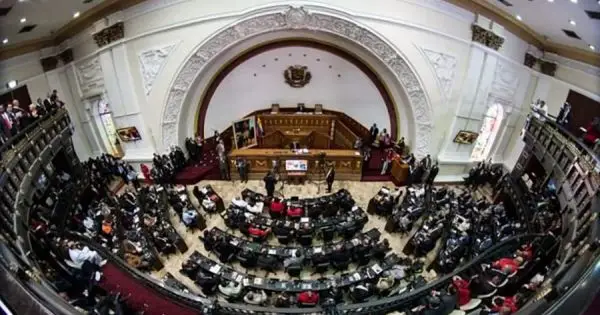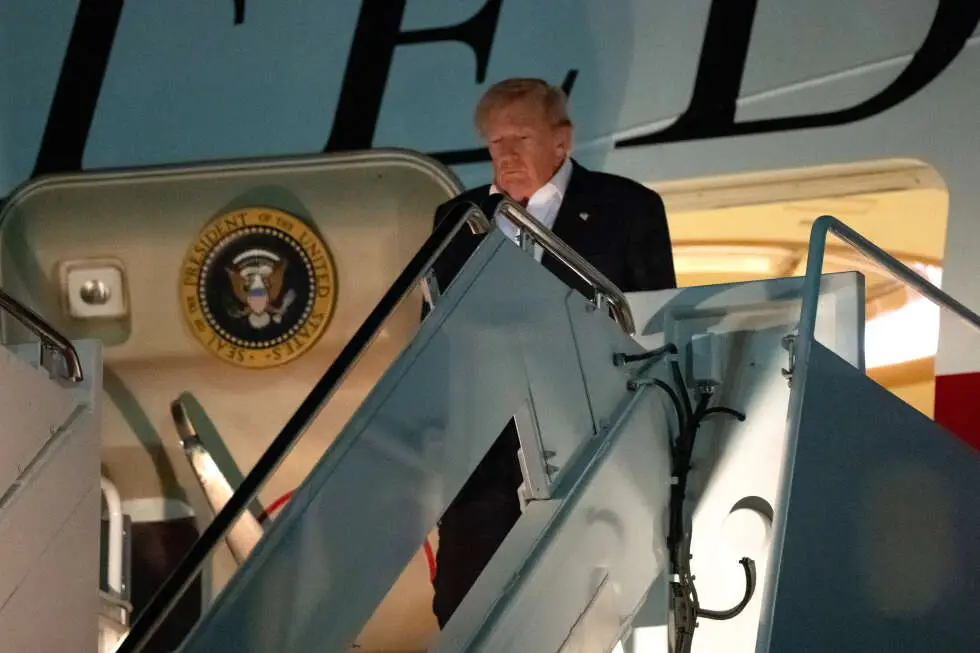







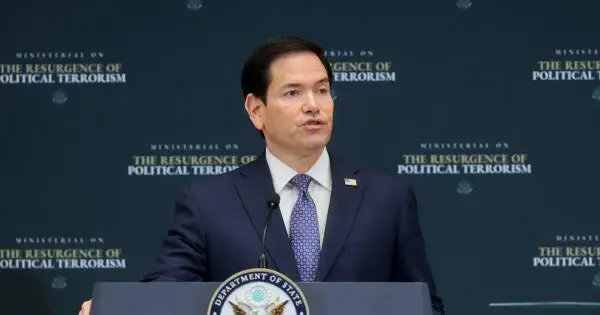
WASHINGTON D.C. – U.S. Secretary of State Marco Rubio announced on Monday that critical talks aimed at initiating a democratic transition in Venezuela are slated to begin in early August. Rubio, a key figure in Washington's diplomatic efforts concerning Caracas, stated that representatives of the National Assembly elected in 2015 – the last legislative body the United States recognizes as legitimate – have met with the interim government and reached an agreement to establish a forum for reconciliation discussions and to formally embark on the transition process.
The announcement signals a significant, albeit cautious, step in the decade-long political stalemate that has gripped the oil-rich South American nation. For years, Venezuela has been mired in a deep political and economic crisis, characterized by hyperinflation, widespread shortages, mass emigration, and a persistent power struggle between the government of Nicolás Maduro and a fragmented opposition.
Washington's Consistent Stance and Interim Recognition
Washington has consistently maintained that the 2018 presidential elections, which saw Nicolás Maduro secure a second term, were fraudulent. Consequently, the U.S. and dozens of other nations recognized Juan Guaidó, then head of the 2015 National Assembly, as Venezuela's interim president, arguing that Maduro's presidency lacked legitimacy. The 2015 National Assembly, despite its term officially expiring, has been upheld by the U.S. as the last democratically elected institution in the country, providing the legal and political framework for the interim government.
Secretary Rubio's involvement underscores the continued U.S. commitment to fostering a democratic resolution in Venezuela. The U.S. has employed a strategy of sanctions targeting individuals and entities associated with the Maduro government, coupled with diplomatic pressure, to push for free and fair elections and a return to democratic norms. The proposed talks represent a potential shift in strategy, or at least a new avenue, towards achieving these long-stated objectives through direct engagement between opposition factions and potentially with international mediation.
The Deep-Seated Crisis and Previous Attempts at Dialogue
Venezuela's crisis runs deep, stemming from years of political polarization, economic mismanagement, and a severe decline in oil production, historically the country's economic lifeblood. The humanitarian impact has been catastrophic, forcing over seven million Venezuelans to flee the country, making it one of the largest displacement crises globally.
Attempts at dialogue and negotiation to resolve the crisis are not new. Several rounds of talks, often brokered by international actors such as Norway, Mexico, and the Vatican, have taken place over the years. However, these efforts have invariably collapsed due to a profound lack of trust between the Maduro government and the opposition, disagreements over electoral conditions, the release of political prisoners, and the scope of any potential transition.
The current initiative, as described by Rubio, focuses initially on reconciliation between the various opposition factions, specifically the 2015 National Assembly representatives and the interim government structure. This internal alignment within the opposition is often cited as a crucial prerequisite for any successful negotiation with the Maduro administration, which has frequently exploited divisions within its adversaries.
Challenges and the Path Forward
While the announcement offers a glimmer of hope, the path to a genuine democratic transition in Venezuela remains fraught with immense challenges. Foremost among these is the deep mistrust that permeates Venezuelan politics. Any successful transition would likely require significant concessions from all parties, a robust international monitoring mechanism, and a clear roadmap towards internationally observed free and fair elections.
Key issues that would need to be addressed in any comprehensive transition plan include:
- Electoral Conditions: Ensuring an independent electoral authority, fair voter registration, and international observation.
- Political Prisoners: The release of individuals deemed political prisoners by the opposition and international human rights organizations.
- Economic Reforms: A plan for economic recovery and humanitarian assistance.
- Institutional Reforms: Restoring the independence of state institutions, including the judiciary and armed forces.
The role of the Maduro government in these initial U.S.-backed talks remains ambiguous. While Rubio's statement focuses on the opposition's internal agreement, any meaningful transition would ultimately require engagement with and eventual participation of the ruling party. Past dialogue attempts have often failed when one side felt its core interests were not adequately addressed, or when external pressures were perceived as overbearing.
The international community, particularly Latin American nations, will be closely watching these developments. Venezuela's crisis has had significant regional spillover effects, including mass migration burdens on neighboring countries like Colombia, Peru, and Ecuador. A stable, democratic Venezuela is seen as crucial for regional stability and economic recovery.
As early August approaches, the focus will shift to the specifics of this reconciliation forum: who will participate, what will be on the agenda, and what mechanisms will be put in place to ensure progress. Secretary Rubio's announcement, while brief, opens a new chapter in the long-running saga of Venezuela's search for a democratic future, underscoring the enduring international pressure for a peaceful and negotiated resolution to its profound crisis.