








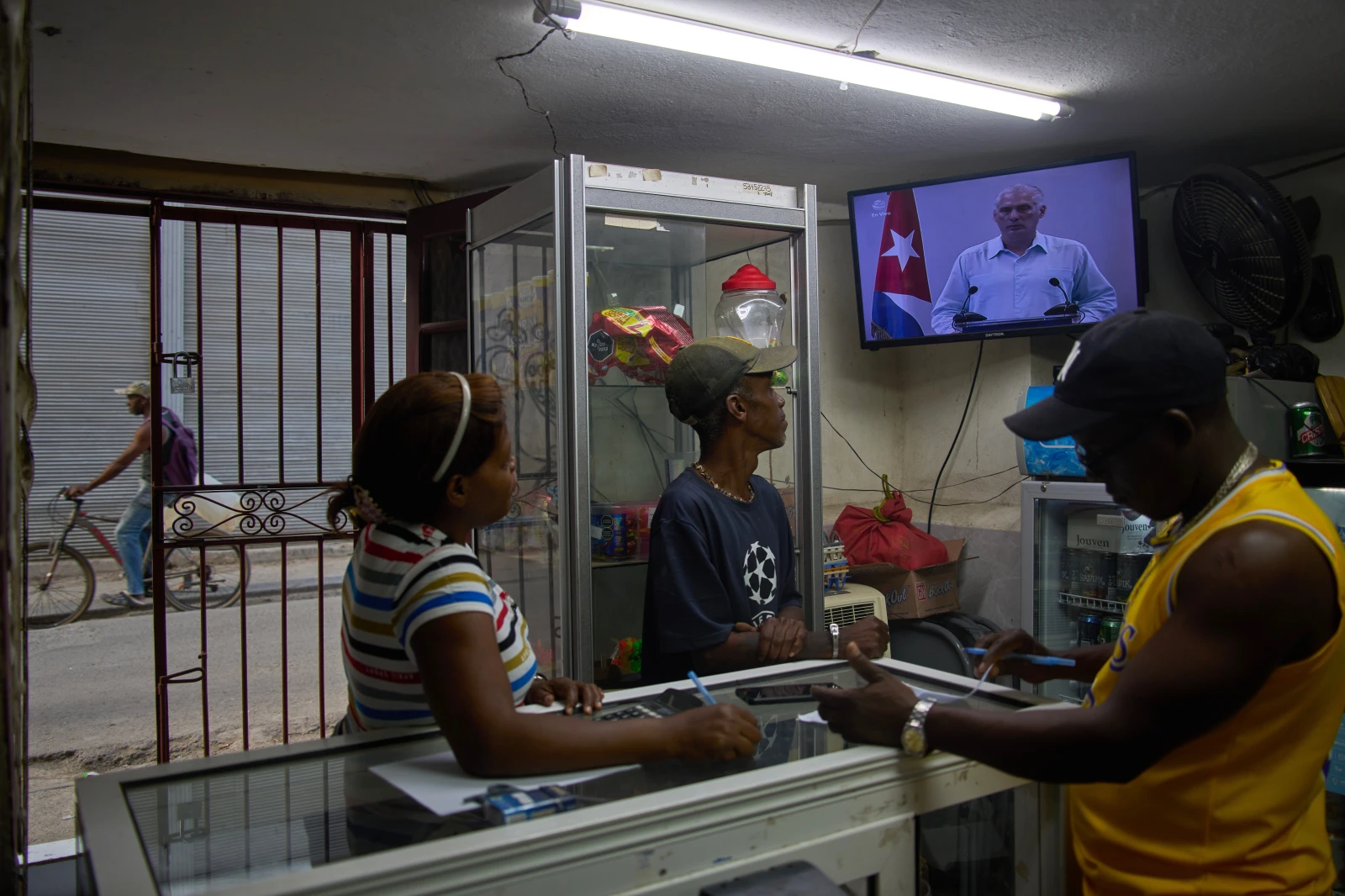
Cuba Confirms Talks With the United States
Cuban President Miguel Díaz-Canel confirmed talks with the US administration on Friday, adding to uncertainty about the country's efforts to handle its energy crisis. Díaz-Canel stated that the purpose of the meetings was to address mutual issues through conversation. The global stage had its own impact on the discussions. No further details or specifics about the meetings were shared, beyond what US President Donald Trump had already mentioned. Cuba and the United States have had a tumultuous history, marked by a long-standing animosity. This was only interrupted by a short-lived thaw during Barack Obama's presidency.
When pressed for a reaction on Friday, the White House noted Trump's public remarks about negotiations with Cuba, which he claimed were being led by US Secretary of State Marco Rubio and sought to impose significant changes in Cuban policies and governance. Shortly after Díaz-Canel spoke, two US officials said that Rubio, the son of Cuban immigrants and a lifelong Cuba hawk, and top aides met with the grandson of retired Cuban leader Raúl Castro, who is seen to have a key role in the government despite not holding an official position. Rubio met privately with Raúl Guillermo Rodríguez Castro on the sidelines of a Caribbean Community leaders forum in St. Kitts and Nevis on February 25.
Energy Crisis and Impact on Daily Life
Díaz-Canel explained that the discussions with the United States were focused on pinpointing "bilateral problems that need addressing, taking into account their seriousness and effects," and then finding solutions. He emphasized the aim was to "gauge both sides' readiness to take tangible steps for the good of the people in both nations." Beyond that, the talks were also meant to identify collaborative opportunities to address threats and safeguard the security and peace of both countries and the wider region. He also blamed the recent fuel shortages in Cuba on a U.S. energy blockade that had been in place for the past three months. Díaz-Canel noted that the island relies on natural gas, solar energy, and thermoelectric plants. The depletion of fuel oil and diesel, he said, had forced the shutdown of two power plants, which in turn had limited electricity generation at solar parks. The latest blackout in Cuba, which brought down the electrical grid, was triggered by a faulty boiler at a thermoelectric plant.
The president explained that Cuba, which relies on its own oil for 40% of its energy needs, has been generating its own electricity. However, this hasn't been sufficient to keep up with the demand. The blackouts have thrown a wrench into communications, education, and transportation. Consequently, the government has been forced to delay procedures for tens of thousands of citizens, he added. "The impact is tremendous." "Even with everything we're doing, we still need oil," he said, noting that production output has also decreased. "Without energy, no country can create at normal levels. All of these changes meant new jobs were needed.
This month, Cuba implemented strict fuel-saving measures, forcing more than 115 bakeries to switch to firewood or coal. "Cubans are desperate," Elvis Hernández, 62, said. "You can't live without water or electricity. That's why we want a consensus. Let healthy discussions happen. Let them get something good from it." Miguel García, aged 65, welcomed news of the discussions with the United States. "If these talks result in agreements and solutions that improve our lives, that's wonderful," he said, "because things are quite difficult at the moment."
Embassy Staffing and Diplomatic Concerns
Three American sources have reported that the State Department is contemplating a cutback in staff at the US Embassy in Havana. The reason? Fuel shortages, a consequence of the American blockade, could potentially hinder the embassy's daily functions. The officials stressed that a solution is still possible, and that the embassy and the State Department are exploring different avenues, including the possibility of importing fuel from private sources, provided the Cuban authorities give their approval. Should the staff at the Havana embassy be cut back, a similar reduction in the Cuban embassy in Washington would probably be sought by the US, insiders suggest.
Brian Fonseca, a Florida International University professor with expertise in the Americas, believes a smaller US embassy footprint wouldn't be a good thing, particularly considering Trump's current push for substantial changes in Cuba. "The diplomatic staff are your eyes and ears on the ground," Fonseca told reporters yesterday. "A downgrading scenario could complicate or challenge U.S. understanding of what's going on on the ground."
Political Tensions and Regional Developments
Critical oil shipments from Venezuela to Cuba were interrupted after the United States attacked the South American country and detained Maduro. Since then, the Trump administration has warned Cuba of a similar destiny. Last week, in Florida, Trump addressed a gathering of Latin American leaders, declaring that Cuba was "very much at the end of the line." He also voiced his anticipation of "great change" coming to the island in the near future.
Díaz-Canel stated on Friday that FBI officials will visit Cuba as soon as both countries share information regarding the recent shooting of a Florida-flagged boat in Cuban seas. Four of the ten Cubans seized by the United States faced execution, the government alleging they had opened fire on local forces. A fifth suspect, the Cuban government announced, succumbed to injuries sustained during the incident. The remaining five have been apprehended and are now facing terrorism charges.



Leave a Comment
Your email address will not be published. Required fields are marked *
Latamchronicle
Live, Breaking News Theme