








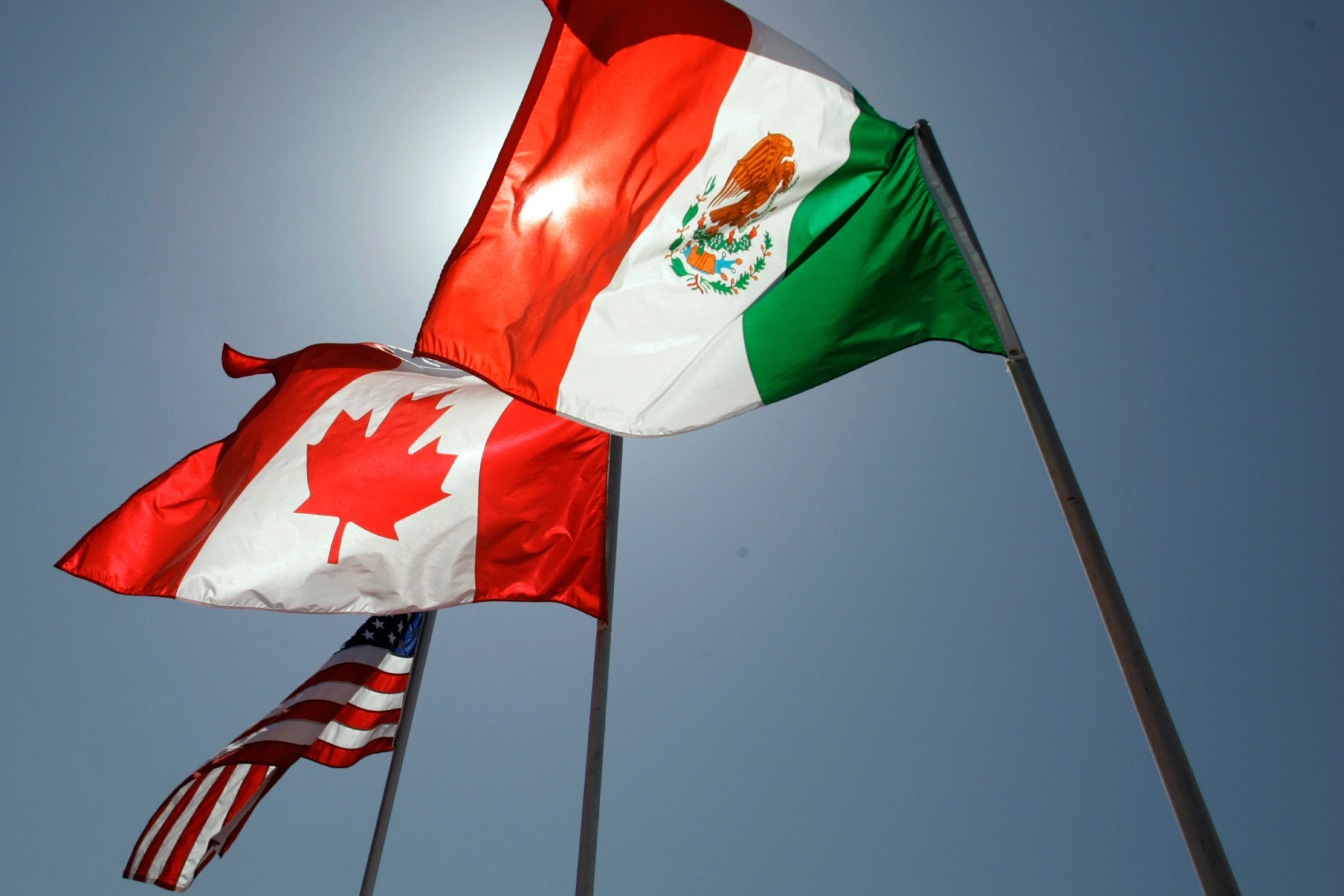
Start of High-Stakes Negotiations to Renew the USMCA
WASHINGTON (AP) — More than $4 billion in goods cross the United States' borders with Canada and Mexico each day, including U.S. auto parts bound for car factories in northern Mexico, cartons of Mexican avocados bound for California supermarkets, and Canadian aluminum destined for Campbell Soup cans.
Much of this thriving cross-border trade is duty-free, thanks to the US-Mexico-Canada Agreement, or USMCA, which President Donald Trump negotiated with America's northern and southern neighbors during his first term.
However, the future of the USMCA, which went into force on July 1, 2020, is uncertain as the three countries begin what could be a contentious attempt to renegotiate the accord this year. The United States is demanding revisions to the treaty, and the top US trade negotiator warned Politico in December that if he does not get the deal he wants, Trump will withdraw from the agreement. Trump also said last fall that the United States may strike separate deals with Canada and Mexico, thereby breaking the three-country North American alliance that past administrations considered as critical to competing economically with China and the European Union.
The discussions between trade officials from the United States and Mexico begin Monday. A sixteen-year extension of the USMCA could, in theory, benefit North America's economies, but it appears improbable. Or they may keep working on ways to improve it; under a cumbersome renewal process, they have until 2036 to achieve an agreement, after which the treaty expires.
Meanwhile, any USMCA member can withdraw from the agreement if it gives its two partners six months' notice—a possibility that Canada and Mexico, which rely significantly on US trade, fear the impulsive Trump will choose.
Economic Stakes and Trade Imbalances
The annual commerce in goods between the United States and its two USMCA partners is valued at $1.6 trillion. Mexico and Canada lead China in both exports to and imports from the United States. American farmers are particularly eager to see the agreement renewed: Last year, they exported roughly $31 billion in agricultural goods to Mexico and $28 billion to Canada.
U.S. imports from Canada and Mexico were spared the harshest of Trump's 2025 tariffs, and many USMCA-compliant items continued to enter the country duty-free. However, a number of products were not exempt from US tariffs, including medium- and heavy-duty vehicles, which incur a 25% levy. Steel, aluminum, and copper tariffs continue at 50%, while Mexican tomatoes are subject to a 17% duty.
The USMCA replaced the 1994 North American Free Trade Agreement, negotiated by President George H.W. Bush and signed into law by President Bill Clinton.
Trump and other critics had blasted NAFTA as a job-killer because it encouraged American companies to shift manufacturing south of the border to take advantage of low-wage Mexican labor and then return goods to the United States duty-free.
The USMCA, which was ratified by Congress with rare bipartisan backing, turned out to be quite similar to NAFTA. However, it did include provisions aimed at encouraging regional industries to pay greater salaries and ensuring that most of what they produced originated in North America.
Competing Priorities in the Negotiations
The new agreement modernized North American trade laws for the digital era. The USMCA, for example, prohibits the United States, Mexico, and Canada from imposing import levies on music, software, games, and other electronic products.
Trump proudly hailed the USMCA as "the fairest, most balanced, and beneficial trade agreement we have ever signed."
But the president's excitement appears to have dimmed. In January, he showed little enthusiasm in the planned talks to renew the deal. He added the effort provided "no actual value to us." It is irrelevant to me."
The USMCA accomplished little to alleviate one of Trump's major concerns: The United States' trade gap with Mexico reached a record $197 billion last year as the country lessened its reliance on Chinese imports. The US also had a $46.4 billion merchandise trade imbalance with Canada last year, down from 2024.
"Improvements are required for it to deliver the high-wage U.S. manufacturing powerhouse and balanced trade (Trump) promised, and we need," said Lori Wallach, head of the American Economic Liberties Project's Rethink Trade program.
Mexico’s Position and Broader Political Context
The United States intends to advocate for a number of improvements, including stricter measures to ensure that goods from China do not enter the United States under USMCA, more output in the United States, and greater access to Canada's protected dairy market for US farmers.
Mexico's primary goals are to prevent a substantial rewrite of the agreement and to make the rules of origin more flexible, enabling imports of parts from outside North America when they are unavailable in the region. Mexican negotiators also want reassurance that any agreements reached will be enforced, giving protection against Trump's volatility and eagerness for tariffs.
Mexico wants to keep tariffs as low as feasible. Mexico's Economy Secretary, Marcelo Ebrard, signaled the country's intention to strengthen the current dispute resolution framework outlined in the agreement. This would not remove the possibility of tariffs, but it would provide clear, quick avenues for seeking answers when difficulties emerge, he said.
Mexican President Claudia Sheinbaum's government will have to deal with ongoing security difficulties, including the execution of the leader of the Jalisco New Generation Cartel in late February, which could have an impact on economic matters.
Mexico expects Canada to join the discussions later, but its top objective in the next months is to achieve deals and maintain free trade with the United States, its primary trading partner.
Mexico is arguing that the deal benefits the United States as well. "The integration of our countries is an absolute prerequisite for the United States to remain competitive," Ebrard told reporters recently. "We must move forward together; otherwise, we will not succeed."



Leave a Comment
Your email address will not be published. Required fields are marked *
Latamchronicle
Live, Breaking News Theme