








U.S. Investment Surge in Latin America’s Critical Minerals
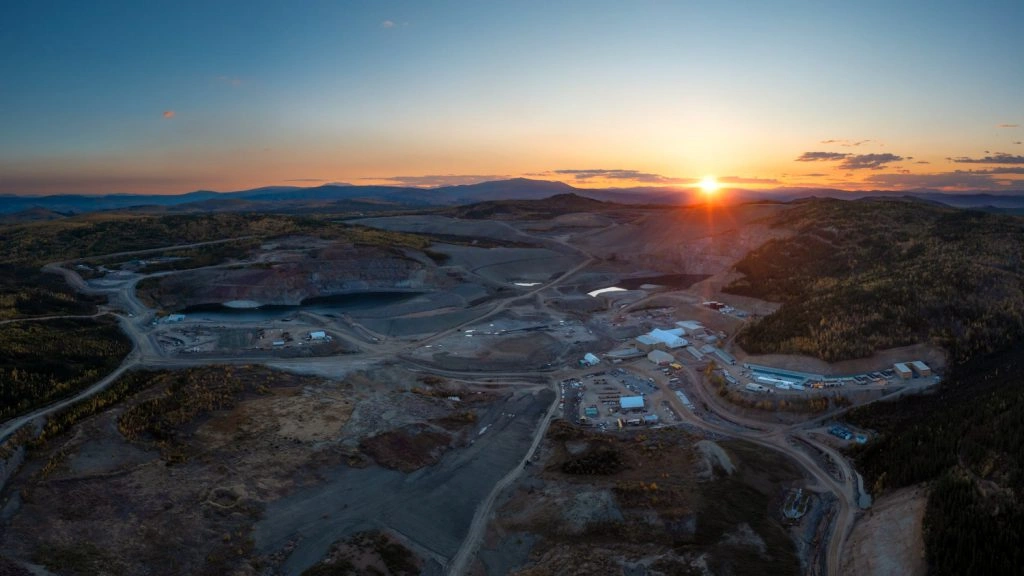
Since the beginning of 2025, the United States has funneled more than a billion dollars into essential minerals throughout Latin America. This investment signals a shift in Washington's strategy, a move to ensure a steady supply of lithium, copper, and rare earth elements. These materials are essential for energy production, national defense, and cutting-edge technologies. According to a report from the law firm White & Case, the uptick in spending toward the end of the Trump administration underscores a wider change in how governments are approaching mining. Critical minerals are now seen less as mere commodities tied to the energy transition and more as strategic assets vital to national and energy security.
According to Rebecca Campbell, the law firm's global head of mining and metals, and project financing partner Fernando J. de la Hoz, projects in Brazil and Argentina are attracting direct interest from US agencies and multilateral lenders via loans, equity stakes, and structured offtake agreements designed to channel output into US-aligned supply chains. "Development of rare earth and critical minerals projects is no longer just a matter of energy transition, but rather, energy security," Tiago Abreu, chief development officer of Brazilian Rare Earths, said participants at a mining summit in Belo Horizonte in June 2025.
Recent finance reinforces the tendency. The Inter-American Development Bank has approved a $100 million loan for a $2.5 billion lithium project in Argentina, while the US Development Finance Corporation is exploring a $465 million investment to develop Serra Verde's rare earth activities in Brazil's Goiás state. Latin America is at the center of the strategic effort, accounting for around 60% of the world's lithium reserves.
Lithium Momentum and Expanding Investment in Brazil and Argentina
Brazil and Argentina are becoming key players in the race to develop essential minerals, driven by their vast reserves, supportive government policies, and a surge in foreign investment. Brazil, sitting on the planet's second-largest rare earth reserves after China, is seeing a surge of interest in Minas Gerais, where a collection of projects has earned the moniker "Lithium Valley." Even though Brazil possesses more than 23% of global rare earth reserves, its current output is a mere 0.02%, highlighting the potential for significant growth.
Argentina, meanwhile, is actively courting investment. The Incentive Regime for Large Investments, or RIGI, was implemented in July 2024 and provides tax, customs, and foreign exchange stability for projects valued more than $200 million. Rio Tinto got the go-ahead under the new rules in May of 2025. This opened the door to a $2.5 billion lithium project in Salta. Argentina, already the leader in Latin America, boasts seven lithium operations. Lithium production capabilities in the country saw a significant increase, jumping from 75,500 tonnes per year in 2023 to approximately 186,000 tonnes by 2025.
The government anticipates reaching 658,000 tonnes by 2035. Market conditions are also recovering following a prolonged decline. In early January 2026, battery-grade lithium carbonate traded near $18,200 per tonne, rebounding as grid-scale energy storage systems expand, despite the fact that the global energy shift is taking longer than expected.
Geopolitical Balancing and Strategic Supply Chains
While US financing is hastening project development, Latin American nations continue to balance geopolitical interests between Washington and Beijing. Chinese enterprises continue to dominate mineral processing, notably rare earths, where more than 90% of worldwide processing takes place in China. According to Campbell and de la Hoz, governments across the region are pragmatic, embracing investment from both sides as they seek finance and technical knowledge to develop mineral resources.
Ilan Goldfajn, who heads the Inter-American Development Bank, observed in December that countries, irrespective of their political affiliations, are making the development of their own processing industries a top priority. The goal is to maximize the benefits of their existing resources. "We're hearing it from every corner of the political spectrum, from left to right, that it's time to boost the value of their key minerals," Goldfajn said in a December Financial Times interview.
Geopolitics has a growing influence on mining transactions and regulatory clearances. Campbell and de la Hoz highlight MMG's planned purchase of Anglo American's Brazilian nickel holdings, now under European regulators' Phase II review, to illustrate how decisions made in Brussels or Washington can influence mining deals far from their borders. Critical minerals, essential for defense, aerospace, and advanced technology sectors, are becoming strategically significant. This is particularly true when considering the need for dependable supply chains.
Copper Investment and the Future of Regional Mining
Copper is poised to be the mainstay of mining investment across Latin America. Chile and Argentina are championing significant copper ventures, anticipating a near doubling of global demand for this essential metal—vital for electrification and power infrastructure—by 2035. Numerous copper projects in Chile are set to begin operations next year, with a combined investment exceeding $7 billion, solidifying the metal's central position in regional mining strategies.
Campbell and de la Hoz argue that the surge in lithium and critical minerals investment signifies a more profound transformation in the global mining landscape. In this evolving environment, geology, government policy, and geopolitical considerations are increasingly determining the locations of new projects.



Leave a Comment
Your email address will not be published. Required fields are marked *
Latamchronicle
Live, Breaking News Theme