







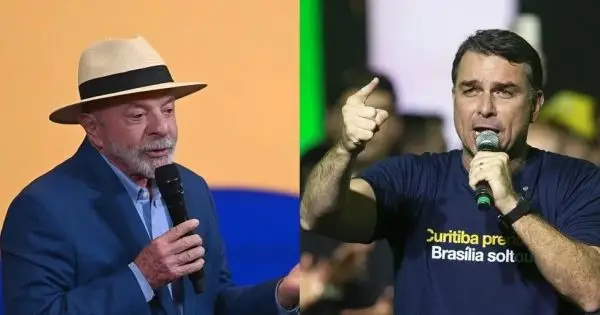
Brazil's political landscape is once again at a fever pitch as the nation's two leading presidential candidates officially launched their campaigns on Sunday, signaling the start of an intense race towards the October 4 elections. President Luiz Inácio Lula da Silva, a figure synonymous with Brazil's left-wing movement, galvanized over 10,000 supporters in his political birthplace of São Bernardo do Campo. Meanwhile, Senator Flávio Bolsonaro, representing the conservative right, rallied his base on the iconic Copacabana beach in Rio de Janeiro, underscoring the deep ideological chasm defining the upcoming vote.
Lula's Return to the Cradle of Labor
For Luiz Inácio Lula da Silva, the choice of the Vila Euclides stadium in São Bernardo do Campo was laden with symbolism. This industrial heartland, part of São Paulo's sprawling metropolitan belt, is where Lula forged his political identity as a union leader in the late 1970s and early 1980s. It was from this working-class bastion that he led strikes against the military dictatorship, laying the groundwork for the Workers' Party (PT) and his eventual two-term presidency from 2003 to 2010.
The rally was a vibrant display of nostalgia and hope, with supporters clad in red chanting slogans of social justice and economic recovery. Lula, addressing the massive crowd, reiterated his commitment to tackling poverty, unemployment, and inequality, issues that have resurfaced with urgency in recent years. His campaign message centered on restoring the social programs and economic stability that characterized his previous administrations, promising a return to a more inclusive and prosperous Brazil. For many, Lula represents a beacon of hope for the nation's most vulnerable, a leader who understands the struggles of the common worker.
Bolsonaro's Beachhead in Rio
Miles away, on the sun-drenched sands of Copacabana beach, Senator Flávio Bolsonaro inaugurated his campaign, drawing a crowd of enthusiastic supporters. Rio de Janeiro holds significant personal and political resonance for the Bolsonaro family, serving as a stronghold for their conservative movement. Flávio, a prominent figure within his family's political dynasty, utilized the iconic backdrop to project an image of strength, patriotism, and a commitment to traditional values.
The atmosphere at Bolsonaro's rally was markedly different from Lula's, characterized by national flags, anti-establishment rhetoric, and calls for law and order. Bolsonaro's campaign is expected to champion themes of economic liberalism, a tough stance on crime, and the defense of conservative social agendas. His appeal often resonates with segments of the population wary of left-wing policies, those prioritizing security, and a strong national identity. The choice of Copacabana, a historically significant public space, underscored his direct appeal to a base that values individual liberty and a more traditional societal framework.
A Nation Divided: Ideology and Trajectories
The parallel campaign launches vividly illustrate the deep ideological polarization that has come to define contemporary Brazilian politics. Lula's narrative is one of a comeback, a redemption story for a leader once imprisoned on corruption charges (later annulled), now seeking to reclaim the presidency to steer Brazil back towards a left-leaning social democratic path. His supporters view him as the architect of a golden age for Brazil, lifting millions out of poverty and enhancing the nation's global standing.
Flávio Bolsonaro, on the other hand, represents a continuation of a conservative wave that has gained significant traction in Brazil. His campaign will likely seek to consolidate and expand upon the right-wing base, emphasizing themes of national sovereignty, fiscal responsibility, and a resistance to what they perceive as socialist overreach. The contrast between the two candidates is not merely political; it reflects fundamentally different visions for Brazil's future, touching upon economic models, social policies, environmental protection, and international relations.
The Stakes for Latin America
Brazil's election carries immense weight not just for its 215 million citizens but for the entire Latin American region. As the continent's largest economy and most populous nation, Brazil's political direction has profound implications for regional trade, environmental policy (particularly regarding the Amazon rainforest), and geopolitical alignments. A Lula victory could signal a shift towards greater regional integration and a renewed focus on multilateralism, potentially strengthening blocs like Mercosur and fostering closer ties with other left-leaning governments in the region.
Conversely, a Bolsonaro presidency could maintain a more independent foreign policy, prioritize bilateral relations, and potentially continue to challenge traditional regional alliances. The election's outcome will undoubtedly influence the regional balance of power, economic stability, and the collective approach to pressing issues such as climate change and migration. Latin American observers will be watching closely, understanding that the choices made by Brazilian voters on October 4 will reverberate far beyond its borders.
The Road Ahead
With the campaigns now officially underway, Brazil is bracing for a period of intense debate, rallies, and media scrutiny. The candidates will crisscross the vast nation, attempting to sway undecided voters and energize their respective bases. Issues such as persistent inflation, high unemployment, social inequality, and environmental degradation are expected to dominate the discourse. The October 4 election promises to be one of the most consequential in Brazil's recent history, offering Brazilians a stark choice between two distinct paths forward, shaping the nation's destiny for years to come.