







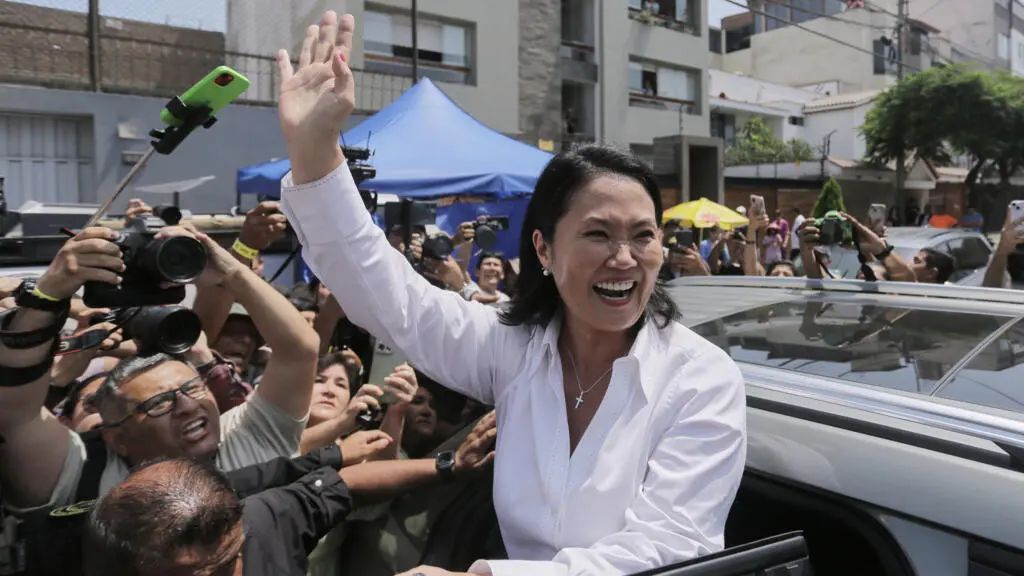
Lima: Peru’s electoral authorities officially confirmed on Sunday that Keiko Fujimori and Roberto Sánchez will face each other in the country’s presidential runoff election scheduled for June 7.
The announcement followed the formal certification of the first-round election results by Peru’s National Elections Board after no candidate secured more than 50% of the valid votes.
Keiko Fujimori, a congresswoman and candidate for the conservative Fuerza Popular party, finished first in the April election with approximately 2.8 million votes, representing 17.19% of the total vote.
Fujimori, 50, is the daughter of former President Alberto Fujimori and has now reached the presidential runoff for the fourth time in her political career.
Roberto Sánchez, representing the left-leaning Juntos por el Perú party, secured second place with roughly 2.015 million votes, or 12.03% of the vote.
Sánchez previously served as foreign trade minister under former President Pedro Castillo.
Runoff Campaign Expected to Intensify
Both candidates outperformed 33 other presidential contenders in an election largely dominated by concerns over crime, corruption and political instability.
Public safety has emerged as one of the biggest issues for Peruvian voters as the country faces rising criminal activity and continuing political uncertainty.
Although Peru’s mining-driven economy has remained relatively resilient, many Peruvians continue to express frustration with years of political turmoil.
More than 70% of voters did not support either Fujimori or Sánchez during the first round, meaning both candidates are expected to seek alliances and coalition support before the runoff.
Political analysts believe the second-round campaign could become highly competitive as candidates attempt to attract undecided voters and supporters of eliminated rivals.
Peru Faces Ongoing Political Instability
Peru has experienced prolonged political instability over the last decade, marked by repeated confrontations between Congress and the executive branch.
The country has had eight presidents in less than ten years as impeachment battles, resignations and corruption scandals repeatedly disrupted government leadership.
Mass protests between 2022 and 2023 left at least 50 demonstrators dead during nationwide unrest linked to the country’s political crisis.
The next president will face major challenges including restoring political stability, strengthening public security and rebuilding confidence in state institutions.
The June 7 runoff is expected to play a crucial role in determining the future direction of Peru’s government after years of turbulence and public dissatisfaction.