







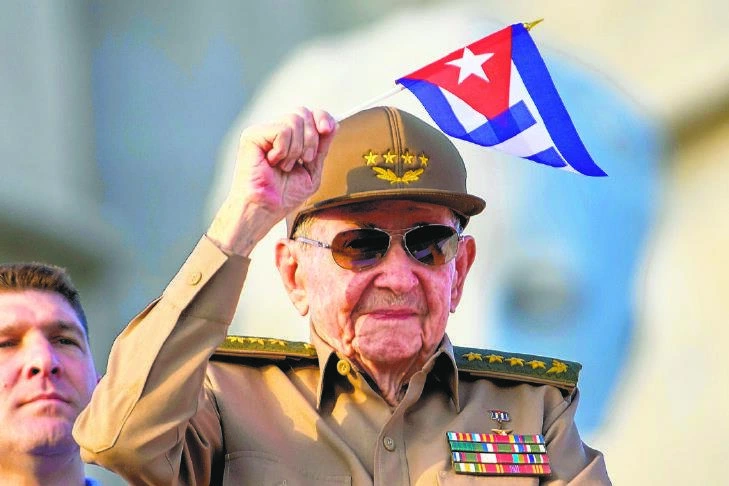
Washington: Wednesday’s U.S. indictment of former Cuban President Raúl Castro is the latest salvo in the Trump administration’s months-long pressure campaign against the Caribbean island’s socialist-controlled government.
Castro was charged for his alleged role in the 1996 shootdown of two planes operated by the Miami-based exile group Brothers to the Rescue. Castro was defense minister at the time.
President Donald Trump has been escalating talk on regime change in Cuba after the military action in Venezuela earlier this year resulted in the capture of President Nicolás Maduro.
In addition, a White House-ordered economic blockade has led to blackouts, food shortages and a collapse in economic activity across Cuba.
The indictment comes amid rising tensions between Trump’s administration and Cuba’s government.
Meanwhile, the U.S. is in the midst of an uneasy ceasefire in the U.S. war against Iran.
Here is a closer look at major developments between Cuba and the United States during Trump’s second term.
January 4
A day after the operation in Venezuela that captured Maduro, Secretary of State Marco Rubio declared Cuba’s government was “in a lot of trouble,” as Trump renewed calls for an American takeover of Greenland.
January 11
Trump warned Cuba’s government “to make a deal BEFORE IT IS TOO LATE” as the island braced for potential unrest following Maduro’s removal from power in Venezuela.
Cuban President Miguel Díaz-Canel responded by accusing Washington of turning “everything into a business, even human lives.”
January 30
Trump signed an executive order imposing tariffs on goods from countries supplying oil to Cuba, a move expected to further damage the island’s economy and energy supplies.
February 27
One day before the war in Iran began, Trump revealed the United States was holding talks with Havana and raised the possibility of a “friendly takeover of Cuba.”
Trump said Marco Rubio was speaking with Cuban leaders “at a very high level.”
February
Raúl Guillermo Rodríguez Castro, known as “Raúlito” and the grandson of Raúl Castro, reportedly met secretly with Rubio during a Caribbean summit in St. Kitts.
March 13
Díaz-Canel confirmed for the first time that Cuba and the United States had engaged in talks amid the island’s worsening energy crisis.
He described the exchanges as efforts “to find solutions through dialogue to the bilateral differences between our two nations.”
March 31
A sanctioned Russian oil tanker arrived in Cuba, marking the first major fuel delivery to the island in three months.
April 9
Díaz-Canel publicly declared that he would not resign despite mounting pressure from Washington and worsening domestic conditions.
April 10
Two senior State Department officials visited Havana and met with Rodríguez Castro as diplomatic contacts continued behind the scenes.
April 12
In an interview with NBC’s “Meet the Press,” Díaz-Canel rejected the possibility of stepping down and warned that any invasion of Cuba would destabilize the region.
April 16
Díaz-Canel addressed supporters during a rally commemorating the 65th anniversary of the Cuban Revolution’s socialist declaration.
He warned Cuba must prepare for “serious threats, including military aggression.”
April 17
Reports emerged that another American delegation had traveled to Havana and met with Cuban officials.
The meetings reportedly represented at least the third high-level contact involving Rodríguez Castro.
April 23
Cuba’s ambassador to the United Nations, Ernesto Soberón Guzmán, declared Havana would not accept American ultimatums regarding the release of political prisoners.
He said Cuba’s internal affairs “are not on the negotiating table.”
April 28
Senate Republicans blocked Democratic legislation that sought to limit Trump’s ability to continue the U.S. energy blockade against Cuba without congressional approval.
May 7
American officials stated the United States was not planning imminent military action against Cuba despite Trump repeatedly warning that “Cuba is next.”
The officials also said Havana had not yet rejected a proposed humanitarian aid package involving food, medicine, agricultural assistance and Starlink internet access.
May 14
CIA Director John Ratcliffe met with Cuban officials, including Raúl Castro’s grandson, during a high-level visit to Havana.
The discussions reportedly focused on intelligence cooperation, economic stability and regional security.
May 15
Reports revealed that the U.S. Justice Department was preparing an indictment against Raúl Castro linked to the 1996 Brothers to the Rescue aircraft shootdown.
May 18
The State Department announced additional sanctions targeting several Cuban government agencies, including the Interior Ministry and intelligence services.
May 20
Federal prosecutors officially announced a grand jury indictment against Raúl Castro over the 1996 incident involving the downing of two exile-operated aircraft.
US-Cuba Relations Enter Dangerous New Phase
The indictment against Castro represents one of the most serious escalations in U.S.-Cuba relations in decades.
Trump’s second administration has combined economic sanctions, diplomatic pressure, intelligence cooperation and public threats in an effort to weaken Havana’s leadership.
Cuba, meanwhile, continues facing severe fuel shortages, blackouts, economic collapse and growing social frustration.
Despite public hostility between the two governments, multiple reports suggest secret diplomatic channels remain active.
Analysts warn that continued escalation could further destabilize the Caribbean region while deepening Cuba’s humanitarian and economic crisis.