







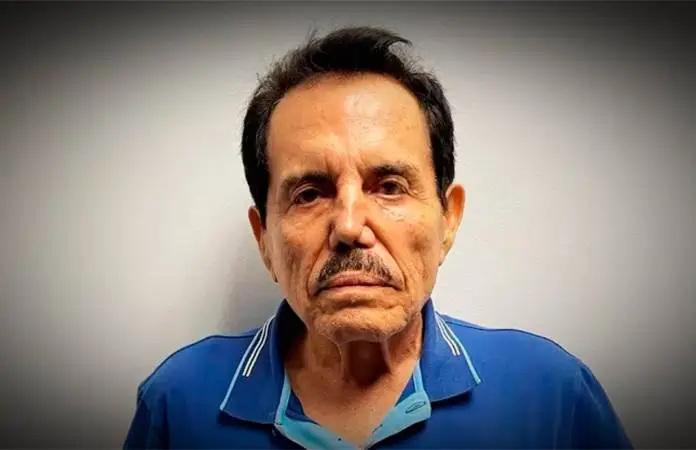
Mexico has opened an investigation into whether the United States violated its sovereignty during the 2024 capture of Sinaloa Cartel leader Ismael "El Mayo" Zambada following new claims that U.S. officials may have participated directly in the operation.
The dispute has renewed tensions over cooperation between Mexico and the United States in combating organized crime, with Mexican officials demanding to know how Zambada was taken from Mexico into U.S. custody.
The Mexican government said it is investigating whether U.S. agencies participated in an operation carried out on Mexican soil without prior authorization from Mexican authorities. Officials have challenged earlier denials of direct U.S. involvement and are seeking additional information about the circumstances surrounding the capture.
Questions Surround the 2024 Capture
Zambada, one of Mexico's most powerful and elusive cartel figures, was taken into U.S. custody in July 2024 after arriving in the United States aboard an aircraft with Joaquín Guzmán López, the son of imprisoned cartel leader Joaquín "El Chapo" Guzmán.
U.S. officials described the arrest as a major blow to the Sinaloa Cartel, while Mexican authorities said they had not been informed about the operation in advance.
Exactly how Zambada ended up in the United States remains controversial, with ongoing questions over who arranged the flight, who controlled the aircraft and whether U.S. agencies were involved before the arrest took place.
The latest investigation follows reports suggesting the FBI may have participated in the operation, contradicting earlier public statements from U.S. officials that no American agencies had been involved.
Mexico Raises Sovereignty Concerns
Mexican officials have emphasized that any foreign security operation conducted on Mexican territory requires authorization from the national government.
President Claudia Sheinbaum has requested detailed information about the operation and questioned whether Mexico was misled regarding the role played by U.S. agencies.
Officials stressed that cooperation between both countries in combating drug trafficking must be based on transparency, mutual trust and respect for Mexico's legal authority.
The issue remains particularly sensitive because Mexico and the United States have cooperated against organized crime for decades, yet disagreements over intelligence sharing and cross-border operations have repeatedly created diplomatic friction.
FBI Reports and Conflicting Accounts
The controversy intensified after reports linked the FBI to the operation that resulted in Zambada's arrest, raising new questions about the explanations previously provided to Mexican authorities.
Officials are now examining whether inaccurate information was given to the Mexican government and whether U.S. agencies withheld important details from their counterparts.
The FBI has not publicly disclosed operational details, while U.S. officials continue to emphasize their commitment to targeting senior cartel leaders involved in international drug trafficking.
The dispute illustrates the complexity of multinational law enforcement operations involving multiple intelligence and security agencies.
Sinaloa Cartel Faces Internal Turmoil
Zambada's arrest dealt one of the most significant blows ever suffered by the Sinaloa Cartel.
For decades, he was regarded as one of the most influential figures in Mexican organized crime, avoiding capture despite sustained international efforts to bring him to justice.
His removal triggered internal conflict between factions loyal to the Guzmán family and those aligned with Zambada.
The resulting instability has increased concerns over renewed violence as rival groups compete for territory, trafficking routes and criminal influence.
Security Cooperation Under Pressure
The timing of the investigation presents another challenge for security relations between Mexico and the United States.
Both countries rely heavily on bilateral cooperation to combat drug trafficking, arms smuggling and organized crime, but those efforts have repeatedly been complicated by disputes over sovereignty and intelligence operations.
Mexico has previously criticized unilateral actions by U.S. agencies, while American officials argue that aggressive operations are necessary to confront increasingly powerful transnational criminal organizations.
The Zambada case has become another test of how both governments balance effective security cooperation with respect for national sovereignty.
Calls for Greater Transparency
Mexican authorities are demanding detailed documentation about the operation, including information regarding the aircraft used to transport Zambada and Guzmán López to the United States.
Reports that the aircraft was later publicly displayed in the United States have further intensified calls for greater transparency.
Officials say the complete circumstances surrounding the operation must be clarified not only for accountability but also to determine whether existing bilateral cooperation agreements were properly followed.
Future of U.S.-Mexico Security Cooperation
Although the investigation is unlikely to end cooperation between Mexico and the United States against organized crime, it could influence how future joint operations are conducted.
Authorities on both sides are expected to face growing pressure to rebuild trust, improve intelligence sharing and establish clearer operational guidelines for future cross-border investigations.
For Mexico, the inquiry forms part of a broader debate about sovereignty and the limits of foreign intervention in domestic security matters. For the United States, it highlights the challenge of pursuing international counter-drug operations while maintaining strong diplomatic partnerships.
A New Chapter in the Fight Against Organized Crime
The arrest of Ismael "El Mayo" Zambada was initially celebrated as a historic victory against one of the world's most powerful criminal organizations.
Nearly two years later, however, the operation itself has become the focus of a significant political and diplomatic dispute.
Mexico's investigation continues as authorities seek answers about who organized the operation, what role U.S. agencies played and whether established rules governing cross-border law enforcement were respected.
The findings could influence the future of security cooperation between two neighboring countries whose efforts to combat organized crime remain closely connected.