







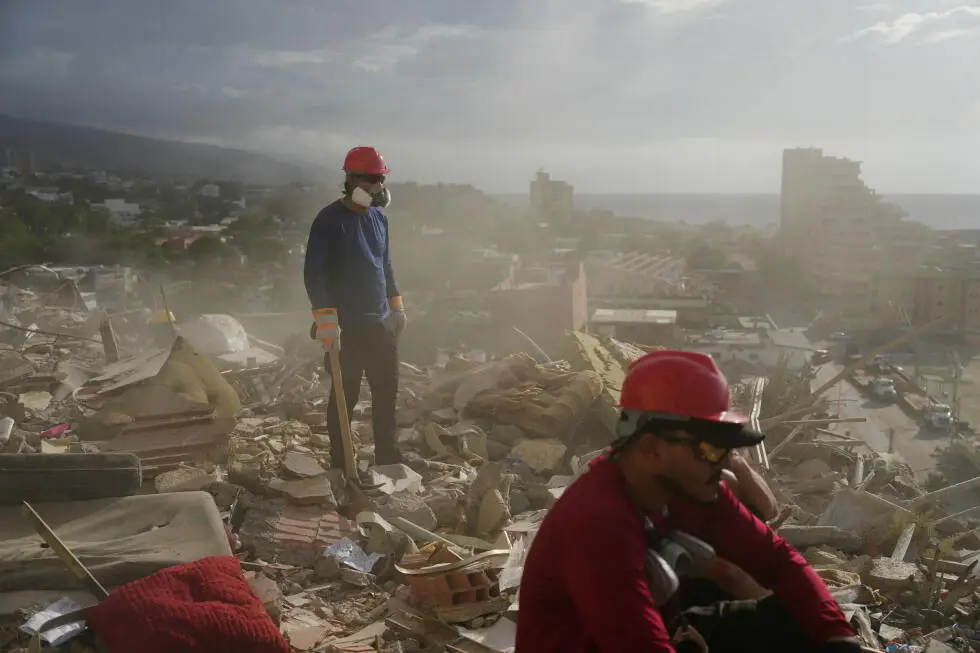
CARACAS — More than a month has passed since devastating earthquakes rocked Venezuela, but for millions across the beleaguered nation, the tremors of crisis are far from over. While initial reports focused on structural damage and immediate casualties, public health experts are now sounding the alarm, warning that the true environmental and health risks have only just begun to manifest. The coming weeks, they assert, are critical to preventing a secondary wave of crises stemming from contaminants and compounding the existing humanitarian challenges.
The scale of the initial seismic events left a trail of destruction, particularly in already vulnerable urban and rural areas. However, the long-term impact extends far beyond collapsed buildings and displaced communities. According to specialists speaking to The Associated Press and echoed by various NGOs on the ground, the integrity of vital infrastructure—from water treatment plants and sewage systems to industrial facilities—has been severely compromised. This damage creates a fertile ground for a cascade of environmental and public health emergencies.
The Looming Threat of Contaminants
One of the most pressing concerns is widespread water contamination. Earthquakes can rupture water pipes, allowing sewage and other pollutants to infiltrate drinking water supplies. In a country like Venezuela, where water infrastructure was already facing significant challenges due to years of underinvestment and neglect, the quakes have pushed systems to breaking point. Access to safe drinking water, a fundamental human right, has become a luxury for many, especially in hard-hit regions.
“We are entering a critical window for waterborne diseases,” explains Dr. Elena Ramirez, a public health specialist who has worked extensively in disaster zones across Latin America. “Cholera, typhoid, and dysentery are real threats when sanitation breaks down and clean water is scarce. The displacement of populations into temporary shelters, often lacking adequate facilities, further amplifies this risk.”
Beyond microbial threats, the potential for chemical contamination is also significant. Venezuela, a major oil-producing nation, has numerous industrial sites, refineries, and storage facilities. While specific details on damage to these installations remain limited, experts fear that structural failures could lead to spills of oil, gas, or other hazardous chemicals, polluting soil, groundwater, and air. Such incidents could have devastating long-term consequences for ecosystems, agriculture, and human health, including respiratory illnesses, skin conditions, and chronic diseases.
Furthermore, the accumulation of debris and waste from damaged structures presents another environmental hazard. Untreated waste can attract vectors for disease, such as rodents and insects, and contribute to air pollution if improperly managed or burned. The sheer volume of rubble requires systematic and safe removal, a monumental task for a country with limited resources.
Venezuela's Pre-existing Vulnerabilities
The current crisis is not unfolding in a vacuum. Venezuela's socio-economic and political landscape has been marked by years of profound challenges, leaving its public services and infrastructure in a precarious state. The healthcare system, once robust, has suffered from chronic shortages of medicines, equipment, and medical personnel, with many doctors having emigrated. This severely limits the country's capacity to respond effectively to a large-scale public health emergency.
“The earthquakes have exposed and exacerbated pre-existing vulnerabilities,” notes Ricardo Rojas, a humanitarian aid coordinator with experience in the region. “Even before the quakes, many communities struggled with intermittent access to water, electricity, and basic healthcare. Now, these services are even more disrupted, making preventative measures and rapid response incredibly difficult.”
The economic crisis has also led to widespread poverty and food insecurity, weakening the immune systems of many Venezuelans, especially children and the elderly. This makes them particularly susceptible to infectious diseases and reduces their ability to recover from illness, further straining an already overburdened healthcare system.
The Need for Coordinated Response and International Aid
Addressing these secondary crises requires a multi-faceted and coordinated response. Public health surveillance systems need to be immediately bolstered to detect and track disease outbreaks. Access to safe drinking water must be prioritized through purification efforts, bottled water distribution, and emergency repairs to infrastructure. Sanitation facilities in temporary shelters and affected communities are also critical.
The Venezuelan government, alongside national and international aid organizations, faces an immense task. While the initial focus of emergency response is often on search and rescue and immediate relief, the transition to preventing secondary disasters is paramount. This demands not only financial resources but also technical expertise in epidemiology, environmental engineering, and disaster management.
International humanitarian aid, which has often faced complexities in reaching Venezuela due to political sensitivities, will be crucial. Organizations like the United Nations, the Red Cross, and various NGOs are already on the ground, but their efforts need to be scaled up significantly to meet the growing demand. A collaborative approach, prioritizing humanitarian imperatives above political considerations, is essential for mitigating the unfolding health and environmental catastrophe.
As Latin America watches, the Venezuelan quake aftermath serves as a stark reminder that natural disasters rarely end with the shaking. For a nation already battling a protracted crisis, the coming weeks will determine whether the initial devastation gives way to an even more profound and long-lasting human and ecological tragedy.